A slab leak repair bill can run anywhere from $300 for a detection visit to $15,000 or more for a full repipe. Knowing how to tell if you have a slab leak early is the single biggest factor in keeping that number on the lower end. This guide breaks down what drives those costs, what your insurance is likely to cover, and what happens to your bill if you wait too long to act.
If you are in Mesa, Gilbert, Chandler, or anywhere else in the East Valley, the construction and water quality here add layers of complexity that generic online guides simply do not address. Let’s get into the specifics.
How to Tell If You Have a Slab Leak: Signs East Valley Homeowners Should Know
Most slab leak symptoms show up gradually, which is exactly why so many homeowners miss them until the damage is already done.
The most common warning signs include:
Your water bill jumps with no explanation. If your usage habits have not changed but your bill is 20 to 40 percent higher than normal, water is going somewhere you cannot see.
You hear running water when everything is off. Walk through your home and stand quietly. If you hear a faint hissing or rushing sound and every faucet and appliance is off, that is a serious red flag.
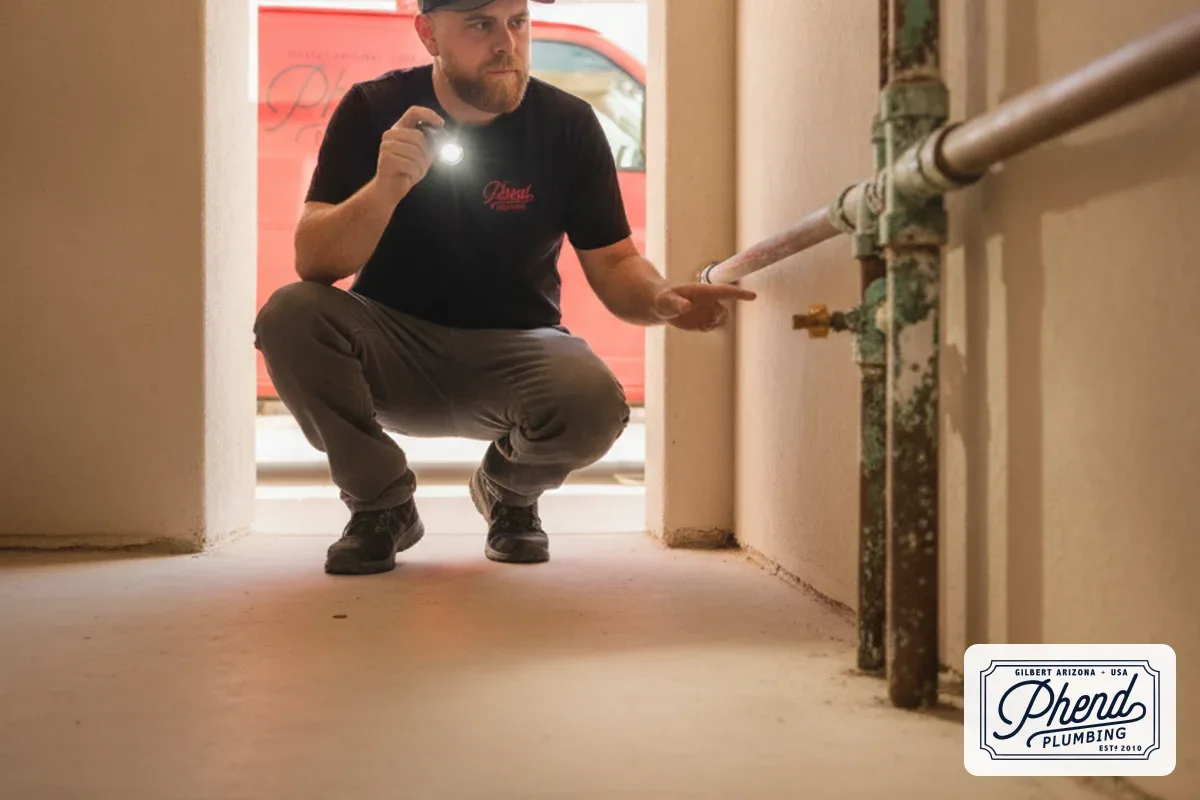
Warm or hot spots on the floor. Hot-water line slab leaks are often detected first by warm spots on tile or hardwood. Heated water escaping beneath the concrete radiates upward through the slab, and you can feel it with bare feet. This symptom is one of the more reliable early indicators in East Valley homes.
Damp carpet, warped wood floors, or wet baseboards. Water migrating up through the slab has to go somewhere. It often shows up at the base of walls or under flooring materials.
Cracks in drywall or flooring. Persistent moisture beneath a post-tension slab can shift the soil and cause the foundation to move slightly. If you are seeing new cracks in walls or floors that were not there before, take it seriously.
Before you call a plumber, do two quick checks at home. First, turn off every fixture and appliance that uses water, then go look at your water meter. If the dial is still moving, you have an active leak somewhere. Second, drop a dye tablet in your toilet tank and wait 15 minutes without flushing. If color appears in the bowl, the toilet itself is leaking and may be the culprit rather than the slab. The EPA’s WaterSense program has a straightforward home leak checklist that walks through both steps.
These DIY checks are useful for ruling things out, but they cannot tell you whether the loss is coming from under the slab. If the meter is still moving after you have ruled out toilets and visible fixtures, it is time to bring in a professional.
What Slab Leak Detection Costs in the East Valley
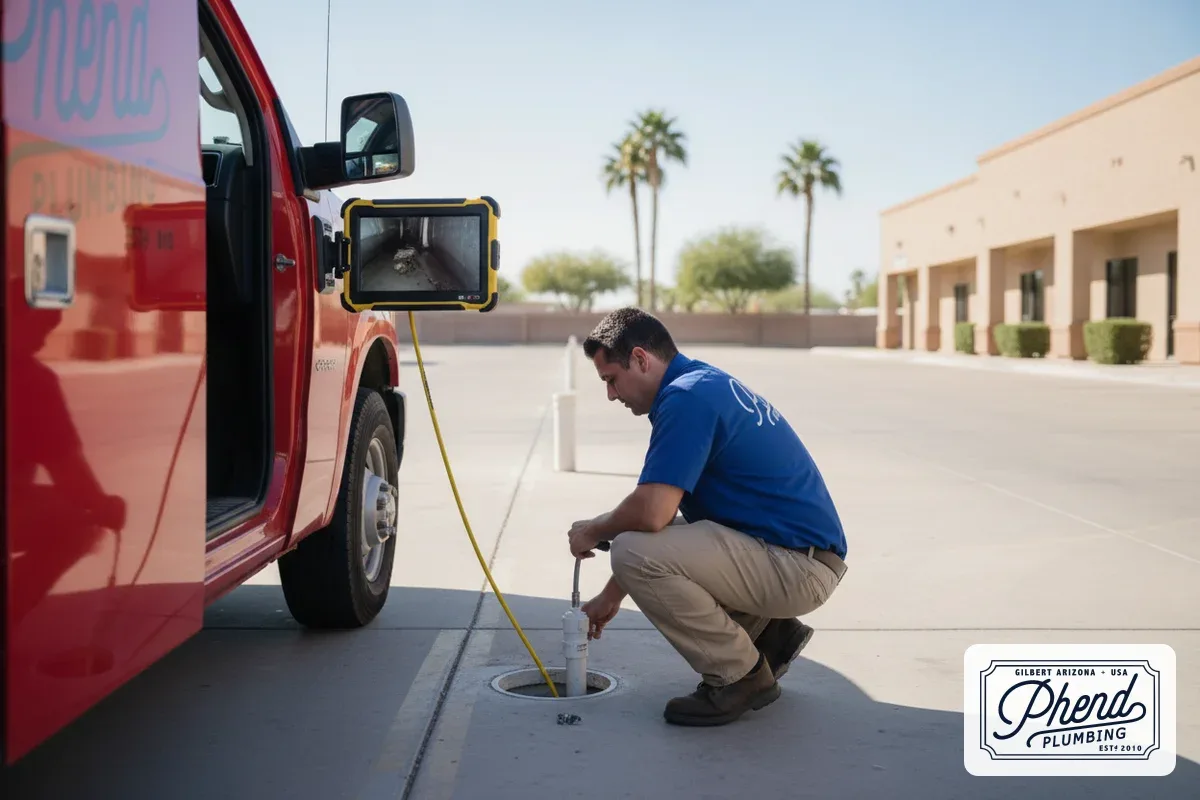
Professional electronic leak detection in the Phoenix metro typically runs $150 to $400. That fee covers the use of acoustic listening equipment and, in many cases, thermal imaging cameras that read temperature differences in the slab surface.
This step is not optional. Concrete cannot be broken up randomly hoping to find a leak. The detection visit tells the plumber exactly where to cut, which directly controls how much concrete work and restoration you pay for afterward.
The American Society of Plumbing Engineers and most licensed contractors agree that skipping detection to save a few hundred dollars almost always costs more in the end when the repair footprint turns out to be larger than expected.
For homes in Mesa and Gilbert, there is an added complication. Nearly every home here sits on a post-tension concrete slab, meaning tensioned steel cables run through the concrete itself. Cutting in the wrong location can sever a cable, which is a structural problem that makes your plumbing bill look small by comparison. Accurate detection is not just about finding the leak. It is about making sure the repair does not create a second, more expensive problem.
Slab Leak Repair Method Cost Breakdown: Spot Repair vs. Reroute vs. Repipe
Once the leak is located, you and your plumber will discuss which repair method makes the most sense. The right choice depends on the age of your pipes, the condition of the rest of the system, and how many times you have dealt with this before.
Spot Repair: $500 to $2,000
The plumber jackhammers directly over the leak, repairs or replaces that section of pipe, and patches the concrete. This is the lowest-cost option and makes sense when the pipe failure is truly isolated and the rest of your supply lines are in good shape. The downside is that if your pipes are old and corroding from hard water, a spot repair today is often followed by another leak somewhere else within a few years.
Pipe Reroute: $1,500 to $5,000
Instead of going through the slab, the plumber abandons the damaged section and runs a new pipe through your walls, attic, or ceiling to bypass it entirely. No concrete is broken. This method works well for a single damaged line and avoids the mess and structural risk of cutting into a post-tension slab. It tends to be the preferred middle-ground option for East Valley homes built in the 1980s and 1990s.
Full Repipe: $8,000 to $15,000 or more
When pipes are old, heavily corroded by years of hard water exposure, or have experienced multiple leaks, a whole-home repipe is often the most economical long-term decision. All supply lines are replaced, typically with PEX tubing, which is more flexible and resistant to the kind of mineral scaling that destroys copper. For more detail on what this process involves, read our guide to repiping your home.
Hard water is a major factor in this decision for East Valley homeowners. The East Valley’s municipal water commonly measures 300 to 500 parts per million in hardness, and that mineral content corrodes copper pipe from the outside in. Hot-water lines under the slab take the worst of it because heat accelerates the reaction. If your home has original copper supply lines and you are seeing your first slab leak, ask your plumber to assess the overall condition of the system before committing to a spot repair.
What Arizona Homeowners Insurance Typically Covers for Slab Leaks
This is where a lot of East Valley homeowners get surprised, and not in a good way.
Most standard Arizona homeowners insurance policies will cover sudden and accidental water damage caused by a slab leak. That means if a pipe bursts and water damages your flooring, drywall, or personal property, that portion of the claim is often covered.
What is frequently excluded:
- The cost of breaking through and replacing the concrete to access the pipe
- Slow or long-term leaks that the insurer classifies as a maintenance issue rather than a sudden event
- The plumbing repair itself, which is generally considered a maintenance expense
The Insurance Information Institute explains the sudden-versus-gradual damage distinction in detail. The short version is that the longer a leak has been running before you report it, the harder the claim becomes.
Two endorsements worth asking your agent about are service line coverage and water backup coverage. These add-ons can cover some of the access and repair costs that a standard policy excludes. Review your policy before you need it, not after water is already migrating through your slab.
Document everything. Take photos of visible damage before any work begins and get a written diagnosis from your plumber that clearly states the leak was sudden and not the result of deferred maintenance. That documentation matters when you file.
The Real Cost of Waiting on a Slab Leak in Mesa or Gilbert
Here is what most articles do not tell you. The plumbing repair is often the smallest line item on the final bill when a slab leak goes unaddressed for weeks or months.
Water migrating beneath a post-tension slab saturates the soil and can cause the foundation to shift. That movement cracks drywall, misaligns doors and windows, and in severe cases requires structural repair that costs far more than any plumbing job.
Beyond the structure, moisture in walls and under flooring creates ideal conditions for mold. Mold can begin colonizing wet drywall within 24 to 48 hours. By the time you see or smell it, remediation is likely required. The CDC’s guidance on mold in the home notes that mold exposure can cause respiratory problems and that the safest approach is to fix the water source immediately and dry the affected area within 24 to 48 hours.
In Arizona’s summer heat, a wet wall cavity dries slowly because interior humidity builds up even as outdoor temperatures climb above 110 degrees. The extreme heat actually traps moisture inside wall assemblies, making mold growth more likely, not less.
A leak that could have been resolved with a $1,500 reroute can become a $10,000 to $20,000 project once flooring replacement, drywall repair, mold remediation, and foundation assessment are added together. Waiting is almost never the cheaper option.
Get an Honest Slab Leak Estimate from Phend Plumbing
Phend Plumbing is a family-owned company with offices in Mesa and Gilbert. We serve homeowners across the East Valley, including Chandler, Tempe, Scottsdale, Queen Creek, and San Tan Valley. We use electronic acoustic detection and thermal imaging to locate leaks accurately before any concrete is touched, and we will walk you through every repair option with straightforward cost ranges so you can make an informed decision.
If you are seeing warm spots on your floor, a moving meter with no explanation, or a water bill that does not add up, do not wait. Call us at (480) 388-6093 for a free estimate. We will tell you exactly what you are dealing with and what it will realistically cost to fix it.
For more on what to expect during a repair visit, read our slab leak repair service overview.
Based out of Mesa and Gilbert, we cover the full Phoenix metro, Phoenix, Gilbert, Scottsdale, and Queen Creek included. From slab leak detection and gas line work, every job comes with upfront pricing and no surprises. Reach us anytime at (480) 388-6093.