When the next leak repair becomes the twentieth one, it is time to repipe.
Copper supply lines in East Valley homes built from the 1970s through the 2010s develop pinhole leaks from the inside out, driven by hard water and chlorinated municipal water. When you are patching the same lines again and again, you are paying for a repipe one leak at a time without getting one. Phend Plumbing replaces the entire supply system with PEX-A or copper, typically in 2 to 3 days, with drywall patched and painted before we leave. Call (480) 388-6093 to talk through your situation.
The water has a brown tint the first time you run the kitchen tap in the morning. You had a pinhole leak in the hall bathroom last spring and another behind the washing machine three months ago. When two people shower at the same time, pressure drops noticeably at both heads. These are not unrelated maintenance issues. They are the same story told in three different places: the copper supply system in your Mesa, Gilbert, or East Valley home has reached the point where individual leak repairs are no longer the answer. A whole-home repipe replaces everything at once. Phend Plumbing does that job across the East Valley, and most homes finish in 2 to 3 days with the house livable each evening and the drywall patched before we leave.
Warning signs your East Valley home needs a repipe
Recognizing a repipe situation early saves money. Every pinhole leak that gets patched individually delays the inevitable while adding to the total repair bill. Here are the clearest signals that a repipe is the right next step rather than another spot repair.
Recurring pinhole leaks. One pinhole leak in a copper supply line is a localized problem. Two or three pinhole leaks in the same home over the same 18-month period is a system condition. The copper is failing from the inside out, and the holes will keep appearing. Patching each one costs several hundred dollars per call, and each repair is a temporary fix on a deteriorating system.
Discolored water, especially on first draw. Reddish or brownish water that clears after running the tap for 30 to 60 seconds indicates corrosion inside the copper pipes. The rust-colored water is dissolved copper oxide and mineral deposits that have built up inside the pipe and flush out when the water moves. This is not a water heater issue; it is a supply line condition.
Pressure drops when multiple fixtures run. A repipe-era copper system that has accumulated mineral scale inside the pipes delivers noticeably lower flow when demand increases. If your shower pressure drops every time someone runs the kitchen faucet, the supply lines are restricting flow beyond what good plumbing should.
Green staining around copper fittings. Verdigris (the green-blue patina) on the outside of copper fittings and pipe joints at fixture connections indicates active corrosion at those points. Heavy green buildup around a fitting, especially with moisture present, indicates a fitting that is failing or has already developed a slow seep.
Age of the home and prior repairs. East Valley homes built from the mid-1970s through approximately 2010 were largely plumbed with copper. If your home is in that era and has had even one or two plumber visits for leaking supply lines in the past few years, get a Phend technician to assess the full system rather than quoting one more spot repair.
Why East Valley copper pipes fail earlier than the national average
Copper supply lines in a market with soft water and low chlorine residuals can last 50 years or more. In the East Valley, two factors work against that lifespan.
Hard water mineral scale. The City of Mesa publishes tap water hardness of 12 to 22 grains per gallon. The Town of Gilbert publishes an average of 8 to 10 grains per gallon. Both sit above the federal hard-water threshold of 7 gpg. Calcium and magnesium carbonate scale builds up on the inside of copper supply lines over years, gradually narrowing the pipe diameter and increasing flow velocity at the restriction points, which accelerates erosion-corrosion on the copper interior.
Chlorinated municipal water and pitting corrosion. Mesa adds chlorine and chlorine dioxide at the treatment plant. Gilbert uses ozonation plus chlorination. Both processes leave disinfectant residuals in the water supply. Chlorine residuals in certain water chemistry conditions contribute to Type 1 pitting corrosion in copper pipe, where small but deep pits form on the interior pipe wall until they penetrate through to the outside surface. This is the mechanism behind pinhole leaks in otherwise sound-looking copper pipe. The outside of the pipe can look normal while the inside is pitting through.
The combination of hard water mineral buildup and chlorine-accelerated pitting is why East Valley copper systems from the 1970s through the early 2000s fail at rates that surprise homeowners expecting a 50-year pipe. In many Chandler, Tempe, and Mesa neighborhoods from that era, a 30 to 35 year lifespan for copper supply lines is not unusual.
A water softener installation does reduce the scale contribution to this process and can extend the useful life of a newer copper system. But when the copper is already showing multiple failure points, softening the water protects future materials, not the current ones.
PEX-A vs. copper: what Phend actually installs
When you call Phend Plumbing for a whole-home repipe estimate, you will get a choice of two materials: PEX-A or copper. Here is what the decision actually involves.
PEX-A (cross-linked polyethylene, Engel method) has become the standard repipe material across the Southwest over the past 15 years. It is flexible, so it runs through walls with fewer fittings than rigid copper requires. Fewer fittings means fewer potential failure points. PEX-A is resistant to chlorine, does not corrode from the inside out the way copper does, and does not accumulate mineral scale on its interior surface. PEX-A also uses expansion fittings rather than crimp or clamp fittings, which most plumbing professionals consider the most reliable connection method.
Copper is still the right answer for certain situations. Some homeowners prefer it for water quality peace of mind, particularly those who plan to run an under-sink reverse osmosis system and want no plastic in the supply line. Copper has a 50-plus year track record and is easily repaired by any licensed plumber. It costs more than PEX-A in material and is more labor-intensive to run through walls because it is rigid. If copper corrosion was the reason for the repipe, you will also want to address the underlying water chemistry before assuming the new copper will last significantly longer than the old.
The honest recommendation. For most East Valley homeowners who are repiping because copper has failed them, PEX-A is the better long-term choice: it does not corrode from the inside out, does not accumulate mineral scale, and runs through walls more efficiently. For homeowners who specifically want copper for their own reasons, Phend installs it. The estimate covers both options so you can make an informed choice.
What a whole-home repipe actually looks like in an East Valley home
The disruption concern is the first question most East Valley homeowners ask. Here is what the process actually involves.
Day 1: Planning and initial access. The Phend crew maps the supply system, identifies the routing paths for new lines, and makes the first round of access cuts. In single-story slab foundation homes (the most common East Valley configuration), supply lines typically run through interior walls and up through the slab or crawl space at connection points. Access cuts are made in drywall at fixture locations, at branch points, and at any location where the new line needs to change direction. At the end of Day 1, the water is typically restored for overnight use.
Day 2: New lines installed. The new PEX-A or copper supply lines are run through the access paths and connected to all fixtures: toilets, sinks, showers, tubs, the washing machine, the water heater, and any outdoor hose bib connections that are being replaced as part of the scope. Water is restored again at the end of the day.
Day 3 (when needed): Finish and patch. On most East Valley single-story homes, Day 3 is finishing work: pressure testing the new system, confirming all fixtures are running correctly, and patching and painting the drywall access cuts. Phend includes the drywall patch and paint in the repipe scope. When the crew leaves, the walls look like they did before the job started, not like a construction site.
Larger homes, two-story layouts, and homes with more complex supply routing may extend the timeline. Phend gives you a realistic estimate of the schedule based on your specific home after the on-site assessment.
Slab foundation note. Most East Valley homes sit on concrete slab foundations without a basement or accessible crawl space. Supply lines in slab homes typically run through interior walls rather than through or under the slab. On a repipe, Phend routes new lines through the wall cavity rather than trenching through the slab, which is less invasive, faster, and keeps the slab intact. If any lines need to exit through the slab at the water meter connection, Phend handles that coordination.
Repipe vs. slab leak repair: when each applies
When a homeowner has a slab leak repair completed, the natural next question is whether the rest of the copper system is also near the end of its life. The two services connect more often than homeowners expect.
A slab leak is a pinhole leak in a supply line that runs under or through a concrete slab foundation. Phend detects these with acoustic and electronic equipment, locates the exact failure point, and repairs it. The repair options range from a spot excavation and patch, to rerouting the line through the wall instead of under the slab, to a full repipe if the system assessment shows multiple lines at risk.
If the home has had one confirmed slab leak, the question Phend asks is: how old is the copper, and has this home had other supply line problems? One slab leak in a 40-year-old copper system that has had no other leaks is a different situation than a slab leak in a home that has had three plumbing calls in 24 months.
In cases where the system assessment during water leak repair response reveals multiple weak points in the copper supply, Phend will lay out both options: repair what is actively leaking now, or repipe the full system and eliminate the pattern. There is no pressure to choose the larger scope. The written quote covers both, and the homeowner decides with full cost information.
What the repipe includes and what to ask before you sign
A repipe estimate should specify exactly what is and is not included. Here is what Phend's repipe scope covers.
What is included:
- Replacement of all interior hot and cold supply lines from the water meter to every fixture in the home
- New shutoff valves at each fixture location
- Pressure test of the completed system before closing
- Drywall access cuts patched and painted to match existing wall finish
- Haul-away of removed copper piping
What affects the scope:
- Water heater connections: if the water heater is old enough to warrant replacement, Phend can coordinate that at the same time so the supply connection is addressed once, not twice
- Outdoor supply lines: hose bibs and irrigation supply connections are typically included in the repipe scope but confirm this in the written estimate
- Permits: Arizona plumbing permits are required for a whole-home repipe and are pulled by Phend before the job starts
Questions worth asking on any repipe estimate:
- Does the drywall patch include texture matching and painting, or cut and patch only?
- Are permits included in the quoted price?
- Does the crew do the drywall work or does it bring in a separate subcontractor?
- What is the warranty on materials and labor?
Phend provides a written quote that specifies all of these before you commit to the project.
How much does a whole-home repipe cost in the East Valley?
Repipe cost varies significantly by home size, number of fixtures, pipe material, and the complexity of the routing. The general East Valley range runs from $4,000 to $15,000 for a whole-home repipe: a smaller home in a single-story layout with straightforward routing and PEX-A falls toward the lower end, while a larger two-story home with copper and extensive drywall patching falls toward the upper end.
Phend does not quote a repipe over the phone. The estimate requires seeing the home because the routing paths, fixture count, home size, and access complexity all affect the labor component substantially. What Phend does commit to: the written estimate before the job starts includes everything listed in the scope section above (including drywall patch and paint), so there are no line items that appear on the invoice that were not on the quote.
Call (480) 388-6093 to schedule an on-site estimate. The assessment visit is free and typically takes 30 to 45 minutes.
Call Phend Plumbing for whole-home repipe in Mesa, Gilbert, and the East Valley
Phend Plumbing serves Mesa, Gilbert, Chandler, Tempe, Scottsdale, Queen Creek, San Tan Valley, and the broader East Valley for whole-home repipe with PEX-A or copper. If you are dealing with recurring pinhole leaks, discolored first-draw water, or a pressure problem that has not been resolved by individual repairs, call (480) 388-6093. We will schedule a free on-site assessment, give you a written estimate for the full repipe scope, and walk you through both PEX-A and copper options so you can make an informed decision.
Recent work
Gallery

Common questions
How long does a whole-home repipe take in an East Valley home?
Most single-story East Valley homes (the standard slab foundation layout common in Mesa, Gilbert, and Chandler) complete a whole-home repipe in 2 to 3 working days. The water is restored each evening so the house is livable during the job. Drywall access cuts are patched and painted before the crew leaves. Larger homes, two-story layouts, and homes with more complex supply routing may take longer. Phend Plumbing gives you a realistic schedule estimate based on your specific home after the on-site assessment.
Is PEX-A or copper better for a repipe in the East Valley?
For most East Valley homeowners repiping because copper has been failing from corrosion or pinhole leaks, PEX-A is the better long-term choice. PEX-A does not corrode from the inside out, does not accumulate the mineral scale that East Valley hard water leaves in copper lines, and requires fewer fittings because it is flexible enough to route through walls without as many elbow connections. Copper is still the right choice for homeowners who specifically want it, and Phend installs both. The City of Mesa publishes water hardness of 12 to 22 grains per gallon and Gilbert averages 8 to 10 gpg, both above the threshold where copper pitting corrosion becomes a factor over time. Your Phend estimate will cover both options.
What causes copper pipes to fail with pinhole leaks in Arizona homes?
East Valley copper supply lines typically fail from a combination of hard water mineral buildup and chlorine-accelerated pitting corrosion. The City of Mesa publishes water hardness of 12 to 22 grains per gallon. Gilbert averages 8 to 10 gpg. Both are above the federal hard-water threshold. Scale builds up on the interior copper surface, and chlorine residuals in municipal water contribute to Type 1 pitting corrosion, where small pits form on the inside of the pipe wall and eventually penetrate through to the outside, creating pinhole leaks. The exterior of the pipe can look intact while the interior is already pitting through. This is why multiple pinhole leaks in the same home over a short period are a system condition, not isolated failures.
Does Phend Plumbing patch the drywall after a repipe?
Yes. Phend includes drywall patching and painting in the repipe scope. The access cuts made to run new supply lines through walls are patched and painted to match the existing wall finish before the crew leaves. You do not need to hire a separate drywall contractor to follow up. Confirm this is in the written estimate before the job starts, as Phend will specify this in the quote.
When does a slab leak mean I should repipe rather than repair?
A single slab leak in an otherwise sound copper system that has not had other supply line problems is generally a repair-first situation. When the home has had a slab leak plus one or more other supply line failures within a 24-month period, or when the pressure test during the slab leak detection visit reveals multiple weak points in the copper, a full repipe is usually the better economic choice. Patching individual failures in an aging copper system costs several hundred dollars each time, and those costs add up quickly. Phend Plumbing lays out both options with written quotes after the system assessment so you can decide with full cost information. Call (480) 388-6093 to discuss your situation.
Free on-site estimate. Written quote covers the full scope, including drywall.
Recurring pinhole leaks, discolored first-draw water, or pressure that drops when two fixtures run at once are all signs that individual repairs have run their course. Phend Plumbing assesses your supply system on-site, quotes the full repipe scope in writing, and completes most East Valley homes in 2 to 3 days with drywall patched before we leave.
- PEX-A or copper — both options quoted, you choose
- Most East Valley homes done in 2 to 3 working days
- Drywall patched and painted included in the repipe scope
- Permits pulled by Phend before work starts
Pete on copper pipes, pinhole leaks, and East Valley repipe decisions.
Short reads on when recurring leaks mean it is time to repipe, how East Valley hard water accelerates copper corrosion, and what a whole-home repipe actually looks like from inside your walls.
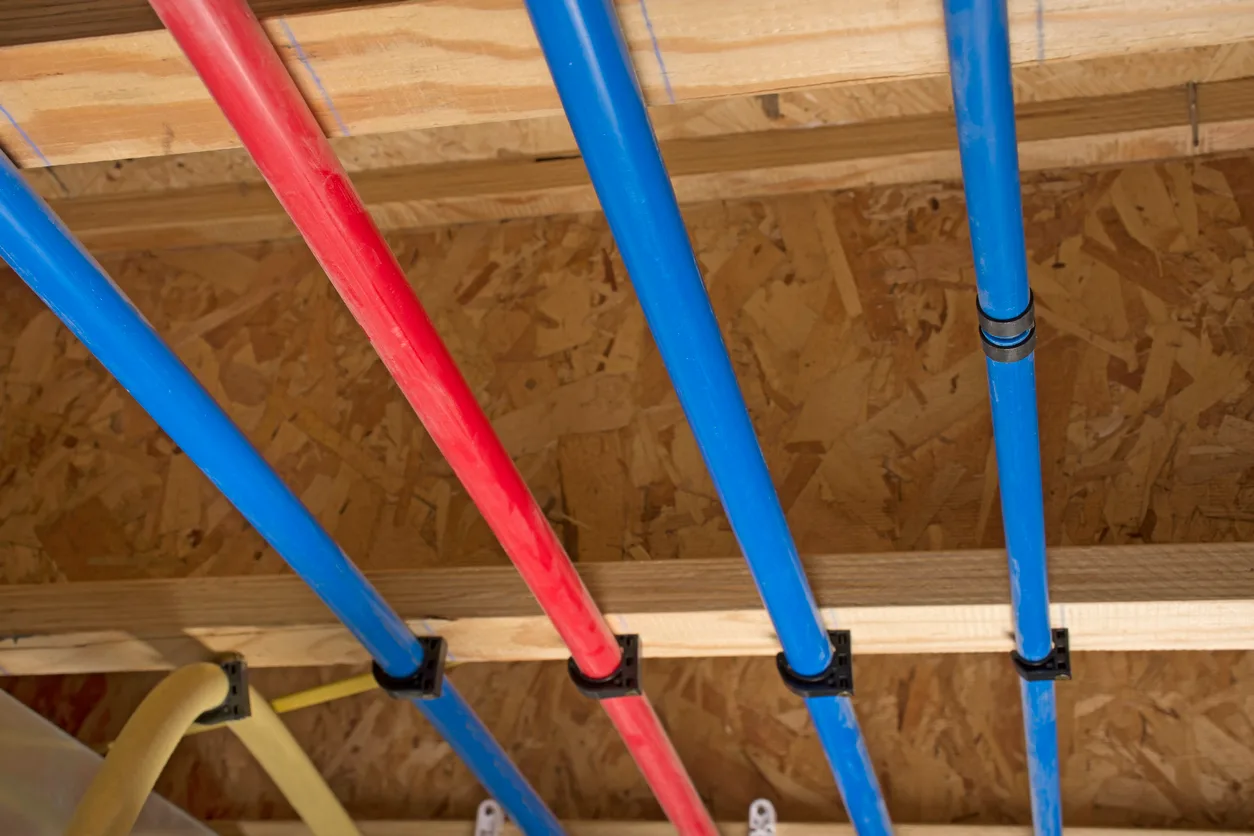
Is it time to repipe? Key signs for East Valley homeowners to watch out for.
Discolored water, recurring pinhole leaks, and pressure that drops whenever two fixtures run at once are not random maintenance issues. Pete explains when they add up to a repipe.


Ask Pete: why are my pipes making noise?
Banging, rattling, and whistling pipes all have different causes. Pete explains what each sound usually means in an East Valley home and when it is worth calling a plumber.

Essential plumbing maintenance tips every homeowner should know.
Hard water, extreme summer heat, and Arizona monsoon season all put your plumbing system under stress that most homeowners do not plan for. Pete covers what to do and when.