Whole-home water softener sized for East Valley water.
Mesa publishes water hardness of 12 to 22 grains per gallon. Gilbert averages 8 to 10. That hardness shortens the life of your water heater, roughens fabrics, leaves scale on glass and aerators, and wears out fixture cartridges faster than they should go. Phend Plumbing installs whole-home ion-exchange water softeners, sized to your household and your actual water hardness, with a free in-home water test before we recommend anything. Call (480) 388-6093.
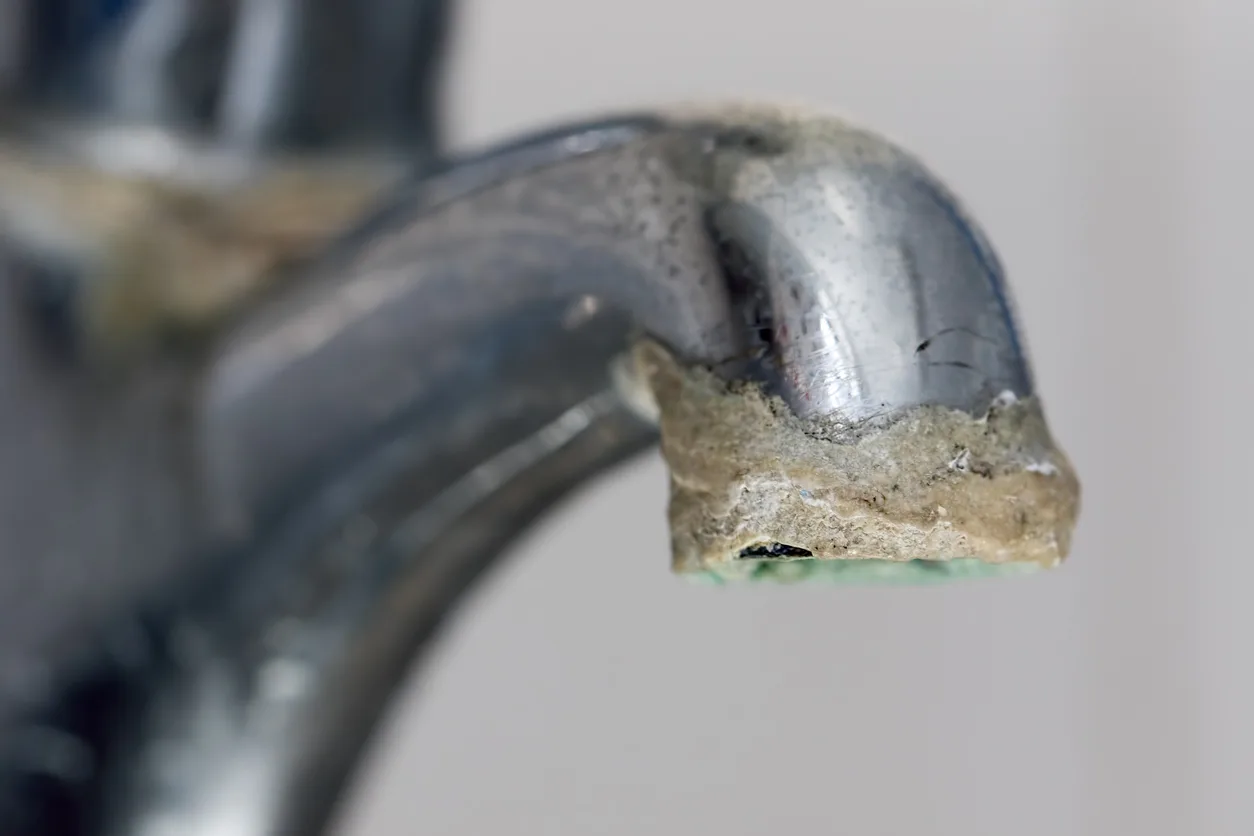
If you live in Mesa or Gilbert, your water is hard. Both cities draw from the Salt River Project (Salt and Verde rivers), the Central Arizona Project (Colorado River), and local groundwater wells. After treatment, the City of Mesa publishes tap water hardness of 12 to 22 grains per gallon depending on source area, and the Town of Gilbert publishes an average of 8 to 10 grains per gallon. Both qualify as hard water by federal classification, and Mesa upper range is very hard. Over time, those minerals deposit inside your water heater heat exchanger, coat the inside of your pipes, clog faucet aerators, spot your shower glass, and abrade the internal components of every valve and cartridge in the house. A whole-home water softener is the most direct way to break that cycle. Phend Plumbing installs, sizes, and services them across the East Valley.
What hard water actually does to your home over time
Most homeowners know hard water leaves spots. Fewer realize how much it costs in accelerated replacement of fixtures, appliances, and piping systems.
The clearest example is your water heater. Scale buildup on a tank water heater heating element or inside a tankless unit heat exchanger forces the equipment to work harder to reach temperature. Tankless units are especially vulnerable because the heat exchanger is a dense coil of narrow passages, and mineral deposits narrow those passages over time. Industry data consistently shows that unsoftened hard water can cut a water heater service life by a third or more. In the East Valley, where Mesa hardness reaches 22 grains per gallon and even Gilbert at 8 to 10 gpg sits above the federal hard-water threshold, the impact is real and measurable. Annual tankless descaling is the maintenance patch, but soft water is the prevention.
Fixture cartridges and ceramic disc valves tell the same story. The constant abrasion of mineral particles hardens the seating surfaces and causes valves to drip prematurely. A faucet that should last 15 to 20 years in soft-water territory may need the cartridge replaced every three to five years in a hard-water home that does not have a softener. That is a maintenance cost most homeowners absorb without connecting it to the water quality.
Laundry and skin are less dramatic, but worth naming. Hard water prevents detergent from lathering and rinsing completely. Towels and clothing feel stiff after washing. Skin and hair feel dry after showering because mineral residue is left behind rather than fully rinsing off. These are quality-of-life issues that a softener fixes immediately and noticeably.
How a whole-home ion-exchange softener works
The standard whole-home answer to hard water is a salt-based ion-exchange softener. Understanding how it works makes it easier to choose the right unit and understand what you are maintaining.
Inside the softener tank is a bed of resin beads. Each bead carries a negative charge and is loaded with sodium ions. When hard water flows through the resin, the calcium and magnesium ions, which are positively charged, swap places with the sodium ions on the resin beads. The water that exits the tank has had its calcium and magnesium removed and replaced with a small amount of sodium. That exchange is why softened water has a slightly slippery feel: the calcium and magnesium that create the grabbing sensation against skin are gone.
Over time, the resin beads become saturated with calcium and magnesium and can no longer exchange effectively. The softener runs a regeneration cycle, using a brine solution drawn from the salt tank, to flush the calcium and magnesium off the resin and reload it with sodium. The spent brine drains to the sewer, and the resin is ready for another cycle.
The key sizing variables are grain capacity (how many grains of hardness the unit can remove per regeneration cycle) and flow rate (gallons per minute the household draws at peak demand). Sizing too small means the unit regenerates too frequently, using more salt and water than necessary. Sizing too large delays regeneration past the point where the resin is still effective, letting hardness breakthrough into the house supply.
Phend calculates sizing from two inputs: your home actual measured water hardness (from the free in-home test) and your household daily water usage estimate based on occupants and fixture count. That calculation produces a specific grain-capacity recommendation, not a generic large or small unit.
Salt-based vs. salt-free: an honest comparison
Salt-free water conditioners are marketed heavily in Arizona because some homeowners want to avoid adding sodium to their water or handling salt bags. It is worth being straight about what they do and do not do.
A salt-free conditioner, also called a template-assisted crystallization (TAC) system or a water conditioner, does not remove calcium and magnesium from the water. What it does is alter the structure of the mineral particles so that they are less likely to adhere to pipe walls and heat exchanger surfaces. The water leaving the conditioner is still technically hard by any test measurement, but the scale-forming tendency of the minerals is reduced.
For households primarily concerned with reducing scale deposits on fixtures, shower glass, and dishwasher interiors, a salt-free conditioner can provide noticeable improvement without the ongoing salt cost or the sodium addition to the water supply. For households with a tankless water heater, older copper supply lines, or a water heater already showing scale buildup, a salt-based softener that actually removes the hardness minerals will provide meaningfully better protection.
The right answer depends on your specific goals and your starting water hardness. Phend does not have a preferred option to sell. The free in-home water test gives you a hardness number, and that number, combined with what you are trying to protect, determines the recommendation.
Sizing a softener for an East Valley home
Sizing is where most builder-grade or big-box softeners fall short. A 32,000-grain unit marketed as standard residential is adequate for a 2-person household on 8 gpg (grains per gallon) Gilbert water. It is undersized for a 4-person household on Mesa water that can run 18 to 22 gpg.
Mesa publishes a range of 12 to 22 gpg depending on source area. Gilbert publishes an average of 8 to 10 gpg. Both are seasonal averages, and your tap hardness can vary by a few grains per gallon through the year as the cities blend Salt River, Verde River, Colorado River, and groundwater. This range is why testing your actual water at your tap matters.
The sizing formula Phend uses is straightforward. Daily water usage per person in the household (70 to 80 gallons per day is the standard estimate for average use) multiplied by household size multiplied by hardness in grains per gallon equals daily grains to remove. The softener grain capacity divided by daily grains equals days between regeneration cycles. The target regeneration interval is every 4 to 7 days. More frequent than that wastes salt and water. Less frequent than 7 days risks hardness breakthrough.
For a typical 4-person Mesa household on 18 gpg water: 4 people x 75 gallons x 18 grains = 5,400 grains per day. A 48,000-grain softener regenerates every 8.9 days, comfortable. A 32,000-grain unit cycles every 5.9 days, also in the target window but with less margin. For a 4-person Gilbert household on 9 gpg water, daily demand drops to 2,700 grains, and a 32,000-grain unit can cycle nearly twice as long between regenerations. That is the kind of calculation that determines which unit Phend recommends for your specific home.
The free in-home water test
Phend does not quote a water softener over the phone based on a ZIP code. The variables that matter, your actual tap hardness, your household size, your current water heater type, and whether you already have any filtration in place, require a conversation and a test.
The in-home water test takes about 20 minutes. A Phend technician runs a hardness test on your tap water using a drop test kit that measures total hardness in grains per gallon. If your water shows other concerns beyond hardness (chlorine taste, sediment, elevated TDS indicating other dissolved solids), those findings factor into whether a softener alone addresses your goals or whether a whole-home filter or reverse osmosis system alongside the softener makes more sense.
At the end of the visit, you get a specific hardness reading for your home, a sizing recommendation with the logic behind it, and a written estimate. There is no commitment required and no pressure to decide the same day. Most homeowners find the test useful even if they decide to wait on installation, because knowing your actual hardness number gives you context for every water quality conversation from that point forward.
Call (480) 388-6093 to schedule.
Installation, maintenance, and salt
A whole-home softener installs on the main supply line after the water meter and before the water heater. Positioning it upstream of the water heater is important: you want the softener protecting the heater, not installed downstream where softened water never reaches the tank inlet.
Phend handles the plumbing connections, including any necessary pipe rerouting to reach the installation location, drain connection for regeneration discharge, and electrical connection for the control head timer. Most Mesa and Gilbert homes have an installation location in the garage utility area near the water heater. Some homes require a longer run to reach the drain connection. Phend assesses the installation location during the water test visit so the estimate includes any additional plumbing the site requires.
Ongoing maintenance for a salt-based softener is simple: add salt to the brine tank as needed, typically every 4 to 8 weeks for a household-sized unit, and schedule a periodic resin cleaning if the water has elevated iron. Mesa and Gilbert municipal water does not have high iron, so this is rarely a factor in the East Valley. The control head should be checked annually to confirm regeneration settings are still accurate as household usage changes.
One salt type note: Phend recommends pellet salt or solar evaporated salt for East Valley installs. Avoid rock salt in the brine tank; the impurities cause bridging and mushing in the salt tank over time, which can prevent the brine from forming correctly for regeneration.
How a softener protects your water heater investment
The connection between water softener installation and water heater replacement timing is direct enough to warrant its own section, because it is the most significant long-term cost justification for a softener in the East Valley.
A tank water heater in hard-water conditions accumulates scale on the heating element (electric) or on the bottom of the tank above the burner assembly (gas). That scale acts as insulation, forcing the heater to run longer to heat the same volume of water. Over years, a heavily scaled tank loses enough efficiency that energy bills go up noticeably and recovery time slows. The sediment that flakes off eventually settles on the bottom of the tank, leading to the rumbling noise many East Valley homeowners hear from aging water heaters.
For tankless units, the problem is more acute. A tankless heat exchanger is a tightly wound coil with small internal passages. At East Valley hardness levels, without a softener or annual descaling, those passages begin restricting within two to three years of installation. Restricted flow through the heat exchanger triggers the unit flow sensor errors and causes inconsistent temperature delivery. Annual tankless descaling with a white vinegar or descaling solution flush clears the exchanger, but soft water coming in dramatically extends the interval between descales and extends the overall service life of the unit.
The math is simple enough: a whole-home water softener that costs less than a thousand dollars to install can extend the service life of a 1,000 to 2,000 dollar tankless water heater by several years. In a household with a tankless unit and no softener, the softener often pays for itself in the first replacement cycle it prevents.
Call Phend Plumbing for water softener installation in Mesa and Gilbert
Phend Plumbing serves Mesa, Gilbert, Chandler, Tempe, Queen Creek, San Tan Valley, Scottsdale, and the broader East Valley for water softener installation and water treatment services. If you are dealing with scale buildup on your fixtures, spots on your shower glass, or a tankless water heater that keeps needing service, start with the free in-home water test. Call (480) 388-6093 and we will schedule a visit, test your actual water hardness, and give you a written recommendation and estimate. No pressure, no commitment required on the same day.
Recent work
Gallery

Common questions
How much does a whole-home water softener cost to install?
A complete whole-home water softener installation in the East Valley, including the unit and all plumbing connections, typically runs between $1,200 and $2,800 depending on the grain capacity needed, the complexity of the installation location, and any additional plumbing required to reach the drain connection. Larger households or homes where the installation requires pipe rerouting fall toward the upper end. Builder-grade units from big-box stores can be purchased separately for less, but sizing errors and improper installation undercut the performance and warranty. Phend provides a written estimate after the free in-home water test, so you see the full cost before committing. Call (480) 388-6093 to schedule a test visit.
What is the difference between a water softener and a water conditioner?
A water softener (salt-based, ion-exchange) physically removes calcium and magnesium from the water and replaces them with sodium. Your water hardness after treatment is effectively zero. A water conditioner (salt-free, template-assisted crystallization) does not remove the minerals. It alters their structure so they are less likely to stick to surfaces, but the water remains technically hard by any test measure. For protecting a tankless water heater or older copper supply lines in a Mesa or Gilbert home (12 to 22 gpg in Mesa, 8 to 10 gpg in Gilbert per the published city reports), a salt-based softener provides better protection. A salt-free conditioner can reduce visible scale on fixtures and glass in homes where adding sodium to the water supply is a concern. Phend installs both and recommends based on your actual hardness reading and your specific goals.
Will a water softener make my water safe to drink?
A water softener is not a water purifier. It removes hardness minerals (calcium and magnesium) but does not filter chlorine, chlorine-dioxide residual, sediment, or other dissolved solids. Mesa and Gilbert municipal water is treated to EPA drinking water standards before it reaches your tap, so it is safe to drink with or without a softener. If your goal is also to improve taste, reduce chlorine, or remove additional dissolved solids, an under-sink reverse osmosis system or whole-home carbon filter installed alongside the softener addresses those concerns. Phend installs both and will let you know after the water test whether filtration is worth adding to your setup.
How much salt does a softener use, and how often do I add it?
Salt usage depends on your water hardness, household size, and regeneration frequency. A typical 4-person Mesa household on 18 gpg water uses roughly 6 to 10 pounds of salt per regeneration cycle, regenerating every 5 to 7 days. That works out to about one 40-pound bag of salt every 4 to 6 weeks. Gilbert homes on 8 to 10 gpg water use roughly half that. Phend recommends pellet salt or solar evaporated salt for East Valley installs. Avoid rock salt, which contains impurities that cause bridging in the brine tank and can interrupt the regeneration cycle. The softener control head has a salt level indicator on most models; checking it monthly and topping off as needed is the main ongoing task.
Do I need to soften the water going to my outdoor hose bibs?
No, and in most cases you should not. Softened water used for irrigation raises the sodium content of your soil over time, which can affect plant health and soil structure. Standard whole-home softener installations include a bypass for outdoor hose bib lines so that unsoftened water goes to irrigation and hose connections while softened water goes to all indoor supply lines. Phend confirms the bypass configuration at installation. If your home was previously plumbed without a bypass, adding one is a straightforward part of the installation job.
How long does a water softener last?
A quality salt-based water softener installed and sized correctly typically lasts 15 to 20 years with basic maintenance. The resin bed can be refreshed rather than replaced if performance drops after a decade. The control valve is the most common wear component and can usually be rebuilt or replaced without replacing the full unit. In the East Valley, where the softener is running on harder water than in most U.S. markets, proper sizing matters more than it does elsewhere. An undersized unit that regenerates every two days will wear out faster than a correctly sized unit cycling every five to six days.
Will a water softener help my tankless water heater?
Yes, significantly. Tankless heat exchangers are particularly vulnerable to scale at East Valley hardness levels because the internal passages are narrow and the heat is intense. Without a softener or annual descaling, scale buildup in the heat exchanger causes flow restriction, temperature inconsistency, and eventually unit failure. Soft water coming into the tankless unit dramatically extends the time between descaling visits and extends the overall service life of the unit. If you already have a tankless heater and have not had it descaled recently, Phend can do both the descaling and the softener installation together. Call (480) 388-6093 to schedule.
How do I schedule a water softener installation with Phend Plumbing?
Call (480) 388-6093 or use the contact form on the site. The first step is the free in-home water test, which gives us your actual tap hardness number and lets us see the installation location before quoting. The test visit takes about 20 minutes. At the end of the visit, you get a sizing recommendation and a written estimate. If you decide to proceed, most installations are scheduled within a few business days. Phend serves Mesa, Gilbert, and the full East Valley from two offices, so response times are tight across our service area.
Free in-home water test. Then a recommendation that fits your home.
Phend tests your actual tap water before recommending any equipment. Mesa publishes hardness of 12 to 22 grains per gallon and Gilbert averages 8 to 10, depending on source area and season. A free 20-minute test gives you a real hardness number for your tap, a sizing recommendation, and a written estimate. No commitment on the day of the test.
- Free in-home water hardness test before any recommendation
- Sizing calculated from your actual water and household size
- Salt-based and salt-free options, honest comparison of each
- Outdoor hose bib bypass included in every installation
Pete on hard water and what it does to East Valley homes.
Short reads on why East Valley water is hard, what that hardness costs in fixture and appliance wear, and how to protect your home before the damage shows up.
Ask Pete: can hard water cause long-term damage to my plumbing?
Mesa and Gilbert sit on some of the hardest water in Arizona. After years of pulling fixtures, Pete explains exactly what hard water costs homeowners and what actually slows it down.

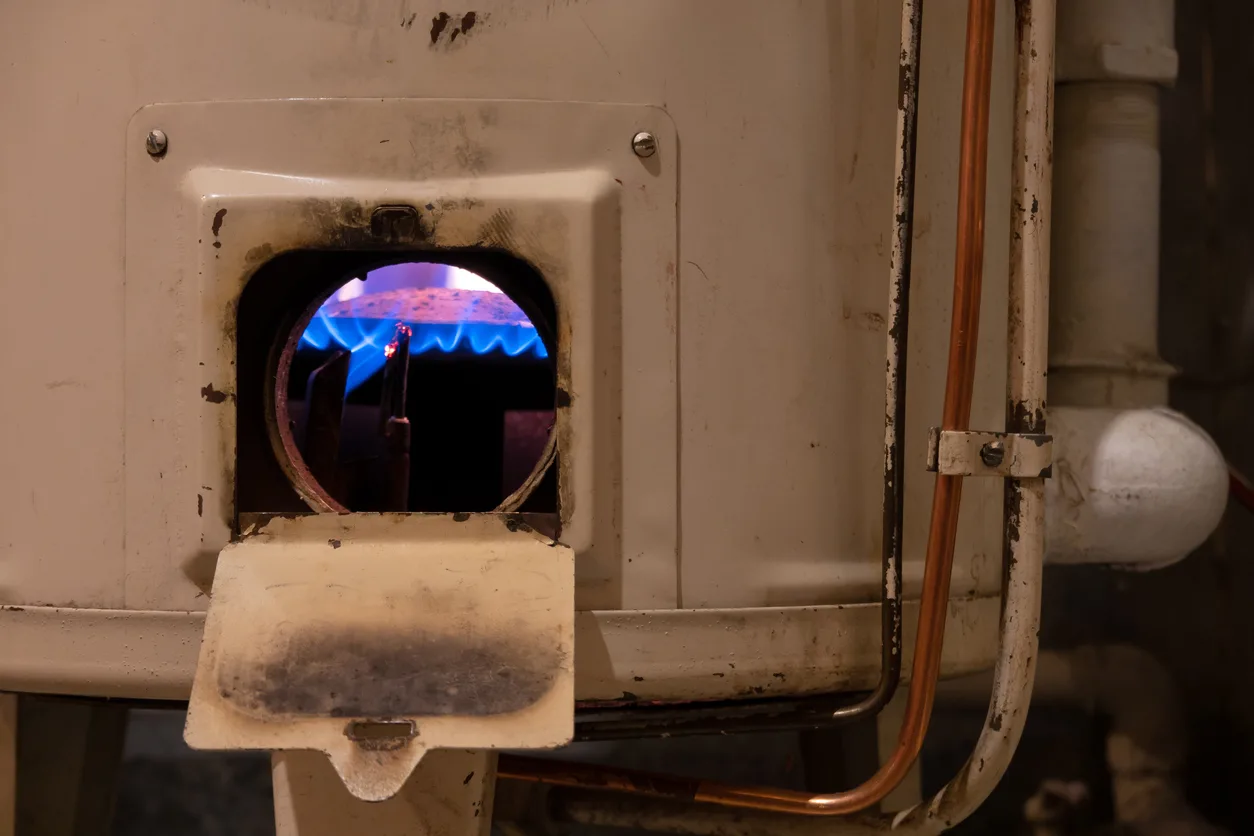
Ask Pete: when should I really replace my water heater?
Age, rust, noise, and slow recovery are all warning signs. Pete explains what East Valley homeowners should watch for before the tank fails, including how hard water accelerates the timeline.

Essential plumbing maintenance tips every homeowner should know.
Hard water, extreme summer heat, and Arizona monsoon season all put your plumbing system under stress that most homeowners do not plan for. Pete covers what to do and when.