Professional tankless descaling that protects your investment.
East Valley water runs 300 to 500 parts per million of dissolved minerals. Without regular descaling, those minerals quietly choke your tankless unit from the inside out. Phend Plumbing flushes it clean and keeps it running like it should.
If you own a tankless water heater in Mesa or Gilbert, scale buildup is not a maybe, it is a when. The East Valley delivers some of the hardest municipal water in the country, routinely measuring 300 to 500 ppm in dissolved calcium and magnesium. When that water gets superheated inside the narrow passages of your tankless unit, those minerals crystallize and cling to the heat exchanger. A professional descaling flush removes that buildup before it cuts your efficiency, kills your flow rate, and shortens the life of an appliance that should last 20 years or more.
Why East Valley hard water is harder on tankless units than you think
Most online debates about whether annual tankless flushes are really necessary come from homeowners in the Pacific Northwest, New England, or other soft-water regions. They are not wrong that soft water makes the schedule more forgiving. But you are not in a soft-water region.
Phoenix-area water consistently earns hard-water status by a wide margin. What that means for your tankless unit is simple: the heat exchanger is doing double duty every time it fires. It is heating your water and it is providing a surface where dissolved minerals want to crystallize. Scale accumulates in layers. Each layer is a better insulator than the last, which means your burner works harder to push the same amount of heat through.
The East Valley summer heat adds another layer of stress. Units installed in garages, which is most of them out here, regularly sit in 130 to 140 degree ambient air through July and August. That heat cycling accelerates the mineral bonding process even when the unit is on standby.
The honest answer to "is the annual flush really an upsell?"
You have probably seen the threads. Some plumber recommending a yearly flush, a homeowner pushing back and saying their Rinnai rep told them to flush as needed, another person saying they went five years without one and the unit is fine. Let us be straight with you.
The flush as needed guidance was written for a national audience. For moderate hard water, 18 to 24 months is a reasonable interval. For East Valley hard water at 400-plus ppm, once a year is a real recommendation based on real water chemistry, not a revenue grab. The manufacturer maintenance schedules say the same thing when you read the fine print tied to your specific hardness range.
That said, if you have a whole-home water softener installed, your service interval genuinely extends. Softened water means far less mineral load hitting the heat exchanger. If you do not have a softener, annual descaling is the single most effective thing you can do to protect that investment.
The other thing worth knowing: Phend uses professional-grade descaling solutions, not vinegar. Vinegar is a common DIY recommendation online and it does have some mild acidic action on calcium deposits, but most major manufacturers explicitly state that vinegar descaling may void the warranty. If your Rinnai or Navien warranty is still active, you want documented professional service with the right chemistry.
What the descaling process actually involves
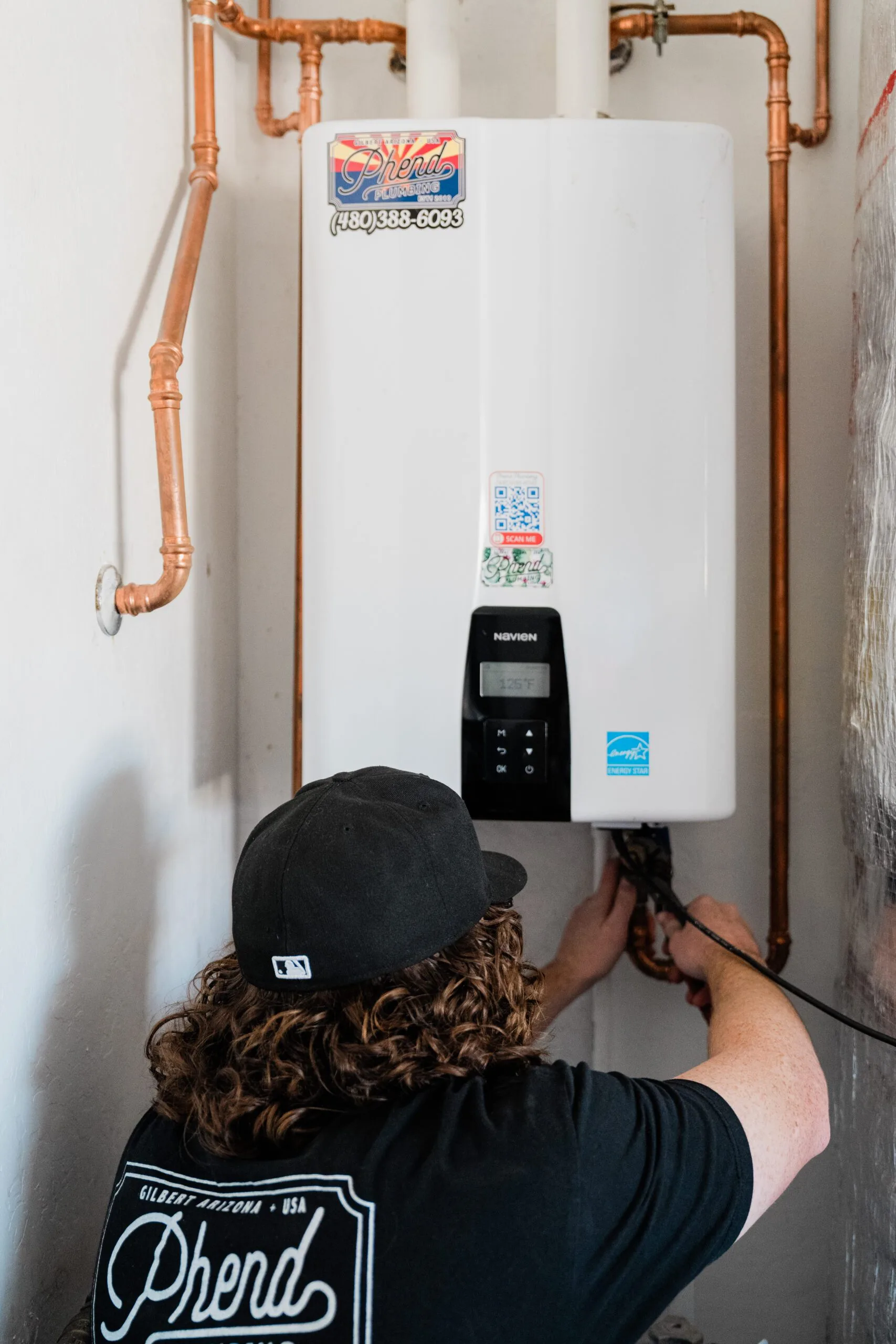
A professional tankless flush is not complicated, but it does require the right equipment and a methodical approach. Here is what Phend Plumbing does on every descale visit.
- System inspection before we touch anything. Before connecting the flush kit, we look at the venting system, check for corrosion on connections, and note the error code history if the unit has a display. If there is an underlying problem, we want to know now.
- Inlet filter cleaning. The cold-water inlet filter catches sediment before it enters the unit. It gets cleaned or replaced on every service call. A clogged filter alone can cause a drop in pressure that homeowners mistake for a bigger problem.
- Professional-grade descaling flush. We connect a dedicated pump and reservoir to circulate descaling solution through the heat exchanger for the time required to break down the mineral deposits. The exact product and contact time depend on your unit's age and the severity of buildup.
- Pressure relief valve inspection. The temperature and pressure valve is a safety device, not a maintenance afterthought. We check it on every visit.
- Final flush and flow check. We flush the system clean with fresh water, restore the connections, and run the unit through a full heat cycle while checking the outlet temperature and flow rate against spec.
- Written service record. You get documentation of what was done, including any findings worth watching. That paper trail matters for warranty purposes and when you eventually sell the home.
Signs your tankless unit is overdue for a flush
You may not notice scale buildup until it becomes a problem. But there are signals worth paying attention to.
- Hot water pressure has dropped at one or more fixtures even though cold pressure is normal.
- The unit fires but you are waiting longer than usual for water to reach temperature.
- Your energy bills have crept up without a clear explanation.
- The unit is throwing error codes, especially flow-related or temperature sensor codes.
- You can hear the unit working harder than it used to, running longer cycles.
- It has been more than 12 months since the last documented flush.
If you are seeing any of these, call us at (480) 388-6093 and we will come take a look. Sometimes a flush is all it takes to bring a struggling unit back to spec.
DIY descaling vs. hiring Phend
You can buy a descaling kit, watch a video, and do this yourself. We are not going to pretend otherwise. Some homeowners do it successfully. What you give up when you go the DIY route:
- The system inspection that happens alongside the flush. A tech who has done hundreds of these notices things a homeowner following a video will miss: a venting connection starting to separate, a pressure sensor reading out of range, early signs of heat exchanger corrosion.
- The right descaling product with chemistry appropriate for your unit's materials and warranty terms.
- A written service record that your manufacturer can verify.
- Someone to call if something goes wrong mid-flush.
For a unit that costs a meaningful amount installed, the professional flush is a relatively small investment in protecting the asset. But you know your situation and your comfort level better than we do. If you want to talk it through, we are happy to give you an honest answer without any pressure.
How tankless descaling connects to hard water treatment
If you find yourself scheduling annual flushes every year and the buildup is consistently heavy, that is a signal your water quality is doing real work on everything in your home, not just the water heater. A whole-home water softener or dedicated water treatment system reduces the mineral load before it ever reaches your appliances, your faucets, your shower heads, or your skin.
Phend Plumbing handles both the water heater service side and the water quality side, so we can look at the whole picture with you. A softener does not eliminate the need for occasional maintenance, but it significantly reduces the frequency and intensity of scale buildup.
Recent work
Gallery

Common questions
How often should I have my tankless water heater descaled in Arizona?
For most East Valley homes on municipal water, once a year is the right interval. Phoenix-area water runs 300 to 500 parts per million of dissolved minerals, which is significantly harder than what most manufacturer maintenance guides assume as a baseline. If you have a whole-home water softener, you can typically extend that to 18 to 24 months. If you are unsure about your water hardness, Phend Plumbing can test it during a service visit. Call us at (480) 388-6093 to schedule.
Is the annual tankless flush really necessary, or is it a plumber upsell?
It is a fair question and you deserve a straight answer. In soft-water regions, where water runs under 100 ppm, many homeowners go two or more years without a flush and see no significant problems. East Valley water is a different situation. At 300 to 500 ppm, mineral crystallization inside the heat exchanger is not a theory, it is what happens. The efficiency losses are measurable, and the risk of a blocked passage causing a failure is real. The flush as needed language in manufacturer guides was written for a national audience. Read the footnotes tied to specific hardness ranges and the recommendation sharpens considerably. Phend does not push unnecessary services. If you have a water softener and your unit is performing well, we will tell you that.
Can I use vinegar to flush my tankless water heater myself?
Vinegar is widely recommended online because it is cheap and it does have mild acidic properties that can act on calcium deposits. The problem is that most major manufacturers, including Rinnai, Navien, and Noritz, explicitly state in their warranty terms that vinegar-based descaling may void coverage. We use professional-grade descaling solutions formulated for heat exchanger materials and compatible with manufacturer warranty requirements. If your unit is still under warranty, it is worth protecting.
What are the signs that my tankless unit needs descaling?
The most common signs are a noticeable drop in hot water pressure, especially when cold pressure is normal, longer wait times for water to reach temperature, unexplained increases in your gas or electric bill, and error codes on units that have a display panel. Louder or longer burner cycles are another signal. Any of these can point to scale buildup reducing the efficiency of the heat exchanger. Call Phend Plumbing at (480) 388-6093 and we can diagnose whether descaling will address it.
What brands of tankless water heaters does Phend Plumbing service?
We service all major residential brands including Rinnai, Navien, Noritz, Bradford White, Rheem, and Takagi. Our techs are familiar with the specific maintenance requirements and error code systems across these platforms. If your unit is a less common brand, call us at (480) 388-6093 and we will let you know whether we can service it before you schedule.
What is included in a Phend Plumbing tankless descaling service?
Our descaling service includes a pre-service system inspection, cleaning the cold-water inlet filter, a full heat exchanger flush with professional-grade descaling solution, inspection of the pressure relief valve and venting system, a final flush and flow-rate verification, and a written service record. If we find anything during the inspection that needs attention beyond the flush, we will tell you before we do any additional work.
How does a water softener affect my tankless water heater maintenance schedule?
A water softener reduces the mineral load in your water before it reaches the heat exchanger. That means less scale formation per heating cycle and a longer interval between professional flushes. Homeowners with a properly functioning softener can typically go 18 to 24 months between descaling services rather than every 12 months. The softener does not eliminate the need for periodic maintenance, but it meaningfully extends the life of the heat exchanger. Phend Plumbing can help you evaluate both options.
How long does a tankless water heater descaling service take?
Most descaling appointments take 60 to 90 minutes from arrival to completion. The exact time depends on the degree of buildup and whether the inlet filter or any other components need additional attention. We do not rush the contact time on the descaling solution, because a shortened flush does not fully break down the deposits.
Schedule your tankless flush today.
One visit a year keeps your tankless unit running at full efficiency and protects a major home investment. Call Phend Plumbing or request a time online for a free estimate.
- Annual descale interval tuned to East Valley hard water
- Professional-grade descaling solution, never vinegar
- Inlet filter, pressure relief valve, and venting checked every visit
- Written service record for your warranty file
More on tankless units and hard water.
Short reads from Pete on what East Valley water chemistry does to your tankless heater, your warranty, and your utility bill.
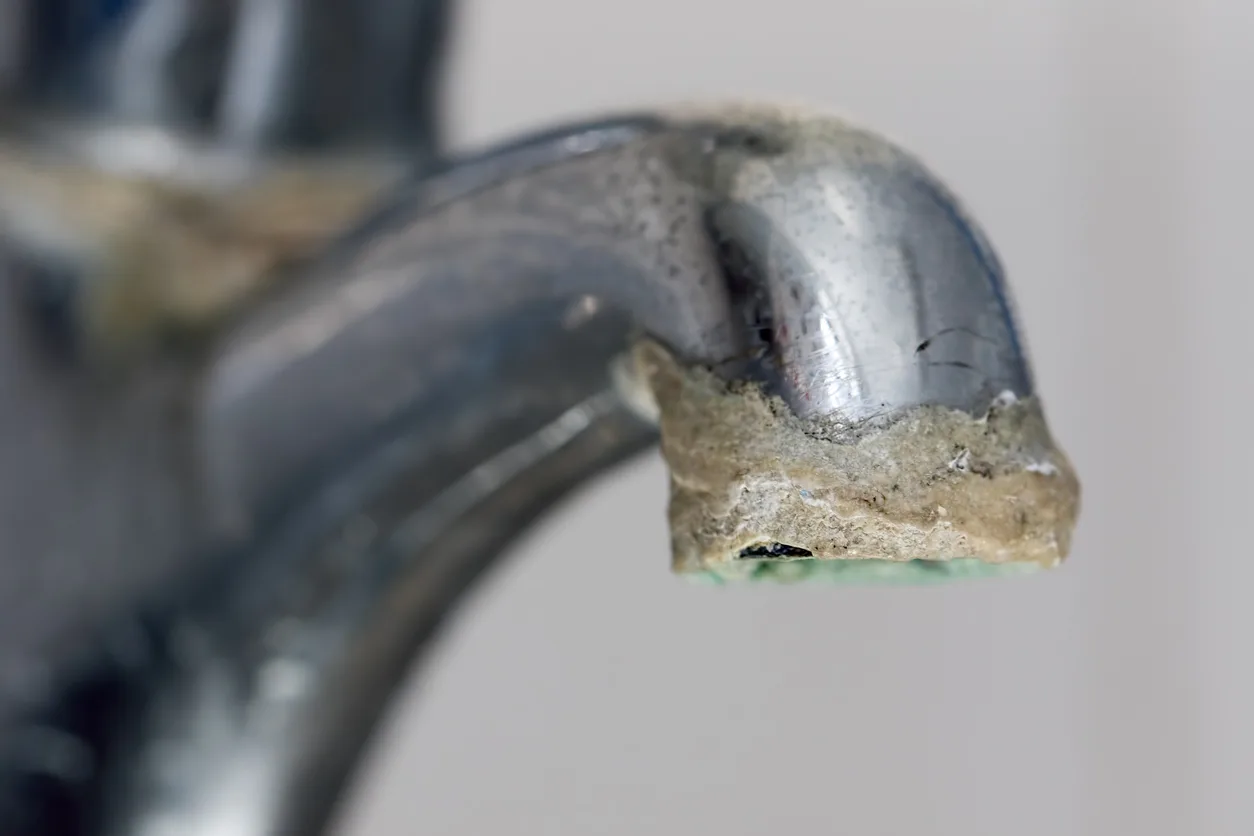
How East Valley hard water damages your tankless heater
Mesa and Gilbert water runs 300 to 500 ppm. Here is how that mineral load crystallizes inside the heat exchanger and quietly chokes your tankless unit.

Tankless vs. tank: what Arizona homeowners actually need to know
Upfront cost, lifespan, and the maintenance reality of hard water. A straight comparison for East Valley homes weighing the two.

The annual water heater maintenance checklist for Mesa and Gilbert
Hard water, summer heat, and garage installs all shorten water heater life. A short yearly checklist keeps your unit honest.