You notice the tile in your hallway feels faintly warm underfoot. A few weeks later your water bill is $40 higher than last month, and you have not changed a single habit. Then one evening, with every faucet off and the dishwasher idle, you hear a soft hiss coming from somewhere beneath the floor. That combination of clues points to one of the most common and most misunderstood plumbing problems in the East Valley: a slab leak. Getting professional slab leak detection on your radar early is the difference between a manageable pipe repair and a months-long remediation project.
Phend Plumbing has been finding and fixing slab leaks in Mesa, AZ for years, and we want you to understand exactly what you are dealing with before it gets worse.
Something Feels Off: The Subtle Signs Mesa Homeowners Notice First
Most slab leaks do not announce themselves with a dramatic flood. They whisper. A pressurized pinhole in a copper supply line beneath your foundation can lose water slowly enough that the visible symptoms take weeks to show up clearly.
Here is what that whisper sounds like in a real Mesa home. The floor in one room feels slightly warmer than the rest of the house, especially first thing in the morning. A faint damp smell appears near a baseboard. You notice a small crack in the drywall near the floor that was not there last season. Your water meter keeps ticking even after you have shut off every fixture.
These are not random. They are connected. And in a slab-on-grade home, which describes the vast majority of houses built across Mesa and the broader East Valley, they mean water is moving somewhere it should not be.
Mesa and the East Valley are dominated by slab-on-grade construction. Your water supply lines run through or directly beneath the concrete foundation rather than through a crawl space or accessible basement. That design means a leak is hidden by several inches of concrete, which is exactly why the symptoms are subtle and exactly why waiting to act is so costly.
Early Warning Signs Most Mesa Homeowners Miss
Beyond the warm floor and the mysterious water bill, there are a handful of signs that get dismissed until the damage is obvious.
Unexplained low water pressure. If one or more fixtures suddenly deliver less pressure than usual and nothing else has changed, a leak in the supply line beneath the slab could be bleeding off that pressure before it ever reaches your faucet.
Cracks in baseboards or flooring. Water migrating upward through a concrete slab does not stay put. It saturates the material above it. Hardwood floors cup and buckle. Tile grout cracks. Baseboards pull away from the wall as the moisture swells the material behind them.
Mold or mildew odor without a visible source. Mesa’s dry climate means you rarely deal with ambient humidity, so a musty smell that you cannot trace to a bathroom or laundry room is a red flag worth investigating immediately.
A constantly running water heater. If your water heater cycles on frequently even when nobody is using hot water, a hot-water supply line leak beneath the slab could be the reason. The system keeps trying to replenish water that is escaping before it reaches any fixture.
If two or more of these signs are present at the same time, stop waiting. The longer a slab leak runs, the more saturated the soil beneath your foundation becomes. In neighborhoods with expansive clay soil, that creates a compounding problem we will come back to shortly.
How Electronic Leak Detection Actually Works
The reason slab leak detection used to mean jackhammering across a floor was simple: plumbers had no way to pinpoint the leak without physically opening the slab. Modern electronic detection changed that entirely.
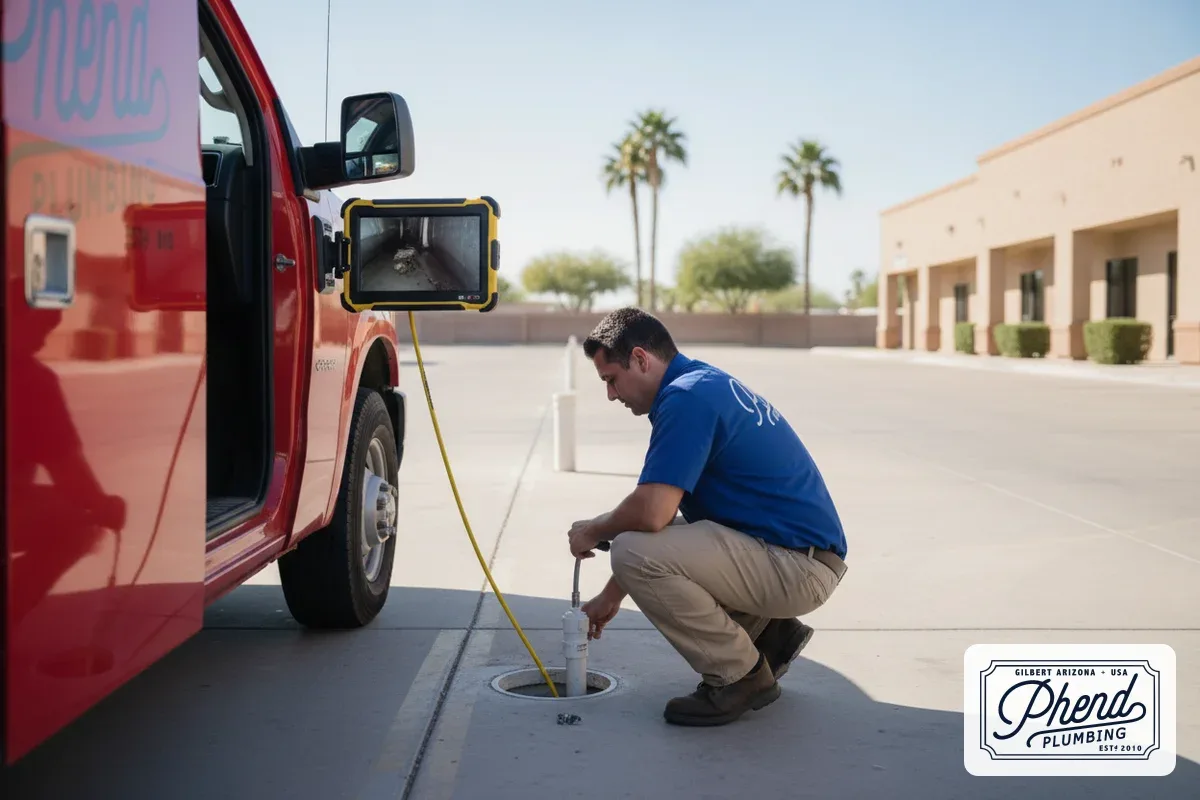
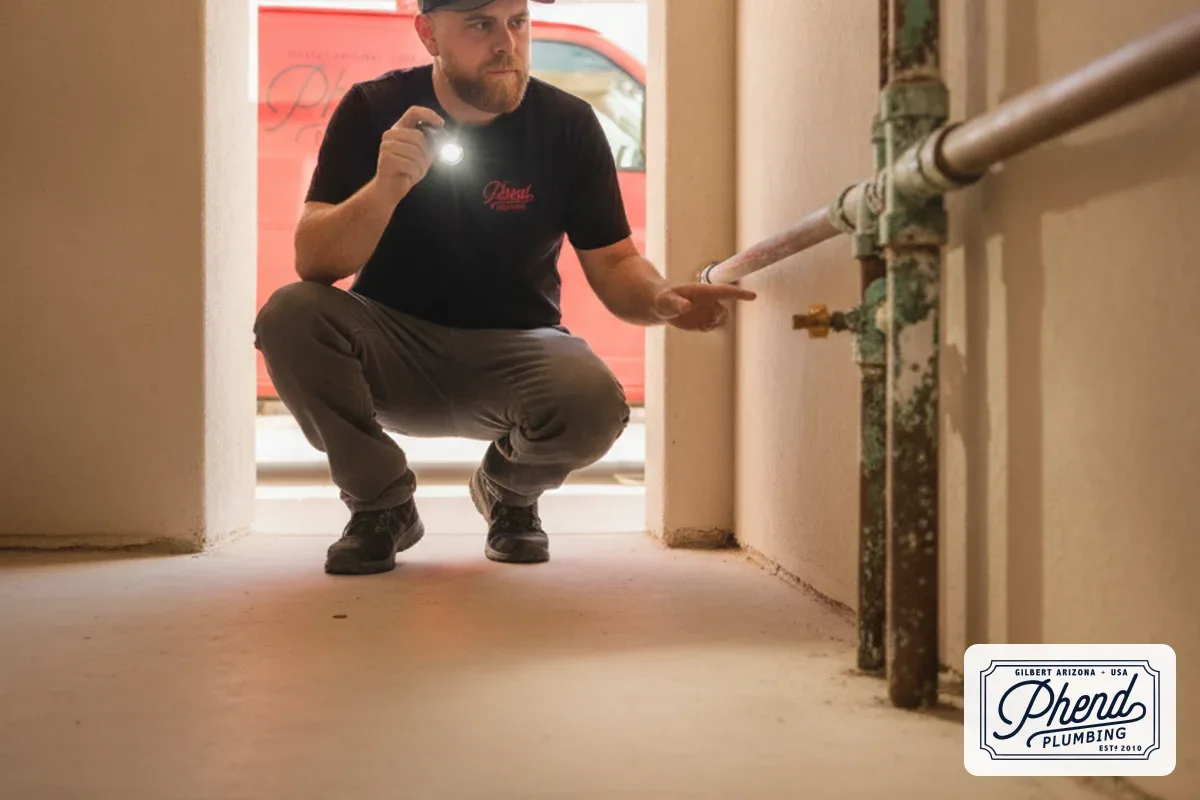
A licensed plumber performing electronic detection typically uses two primary tools. The first is an acoustic listening device that amplifies the sound of pressurized water escaping through a pinhole in a pipe. Water under pressure makes a distinctive high-frequency sound as it forces through a small opening, and a trained technician can trace that sound along the slab surface to identify the exact location within a few inches. The American Society of Plumbing Engineers provides technical guidance on acoustic leak detection methods used in professional practice.
The second tool is a thermal imaging camera. A leaking hot-water line warms the concrete above it, and a thermal camera reveals that temperature anomaly as a visible color difference on the screen. Even a cold-water leak can show up as a cooler zone if the surrounding slab has been warmed by ambient temperature. The U.S. Department of Energy’s Building Technologies Office notes that thermal imaging has become a standard non-invasive diagnostic method for identifying moisture intrusion in building systems.
Before any of this begins, the plumber will run a pressure test on your supply lines. This confirms a leak is present and gives a baseline for how severe it is before any detection work starts.
The result is a pinpoint location, usually accurate to within a few inches, that lets the repair team open only the area they need rather than guessing across a large section of your floor.
Why Mesa Homes Are Especially Vulnerable to Slab Leaks
This is the part most competing plumbing websites skip over, and it is the part that matters most to you as a Mesa homeowner.
First, the pipe age factor. Many Mesa neighborhoods were built out rapidly during the 1970s through the 1990s. Homes from that era were plumbed with copper supply lines that are now 30 to 50 years old. Copper is durable, but it does not last forever, and the combination of age and Arizona’s notoriously hard water accelerates the problem. Mesa’s municipal water supply typically runs between 300 and 500 parts per million in dissolved minerals, well above the EPA’s secondary drinking water standard of 500 ppm. That mineral load deposits scale inside pipes over decades, and the electrochemical reaction between hard water and copper eventually causes pitting corrosion from the inside out. A pinhole is the result.
Second, the soil factor. Arizona’s East Valley soil contains significant amounts of expansive clay in many neighborhoods. When a slab leak allows water to saturate that clay, it swells. When the leak is repaired and the soil dries out, it contracts. That cycle of expansion and contraction puts stress on your foundation from below, which is stress your slab was not designed to handle over the long term. The Arizona Geological Survey has documented expansive soil distribution across Maricopa County, and many Mesa zip codes fall within areas where this risk is elevated.
Third, the heat factor. Arizona’s extreme summer temperatures, routinely above 110 degrees Fahrenheit, affect the ground surface temperature and can mask thermal anomalies that would otherwise be detectable. This is one reason scheduling detection during cooler morning hours or in the fall and winter months produces more reliable thermal imaging results.
Finally, caliche. The dense calcium carbonate layer found beneath topsoil across much of the Valley makes trenching and access work more difficult and expensive than in other regions. That is another reason pinpoint detection before any excavation matters so much here.
What Happens If You Wait: The Real Cost of Ignoring a Slab Leak
Let’s be direct about this. A slab leak that gets addressed within days of discovery is typically a contained plumbing repair. A slab leak that runs for weeks or months becomes a much larger project.
Water migrating upward through a slab saturates the flooring material above it. Wood floors, carpet padding, and the subfloor beneath them become a growth environment for mold. In a sealed, air-conditioned Arizona home, mold can establish itself quickly once moisture is present. The EPA’s mold remediation guidance for schools and commercial buildings applies the same principle to residential settings: stop the moisture source first, then address the contamination. By the time visible mold appears, the remediation scope has already expanded well beyond the original pipe repair.
Beyond mold, prolonged soil saturation beneath an expansive clay foundation can cause settling. Doors that no longer close squarely, visible cracks in the exterior stucco, and uneven floors are all signs that the structural effects have already begun. Structural remediation costs dwarf plumbing repair costs by an order of magnitude.
The water waste alone is worth noting. Even a slow slab leak can lose thousands of gallons per month, running your water bill up steadily while contributing nothing useful to your household.
Repair vs. Repipe: Making the Right Call for Your Mesa Home
Once a slab leak is confirmed and located, you have three main repair paths. The right one depends on several factors specific to your home.
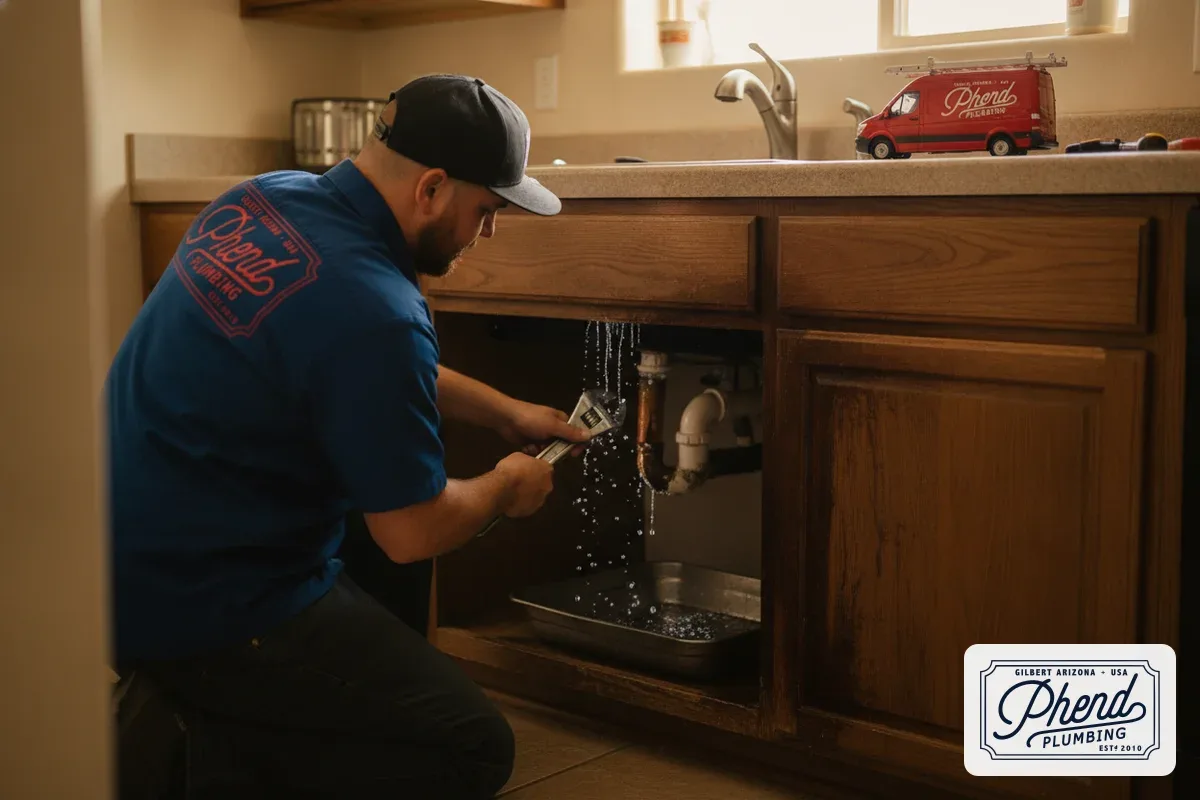
Direct-access spot repair means the team opens the slab at the leak location, repairs or replaces the damaged section of pipe, and patches the concrete. This is the right call when the leak is genuinely isolated, the surrounding pipe is in good condition, and the home is relatively newer with pipe that has many years of service life remaining.
Pipe rerouting bypasses the damaged section entirely by running a new supply line through the walls or attic space rather than through the slab. This avoids opening the concrete and is a good option when the leak location is difficult to access or when the slab conditions make direct repair complicated.
Full repipe replaces all the supply lines in the home, typically with modern PEX tubing, which is far more resistant to corrosion and scale buildup than copper. If your Mesa home was built before 1995 and still has original copper supply lines, and you have experienced more than one slab leak, a full repipe is almost always the most cost-effective long-term solution. You stop chasing individual leaks and eliminate the root cause. Our repipe service page explains the process in detail, and our post Is It Time to Repipe? walks through the decision criteria if you want to think it through before you call.
We will never push you toward the most expensive option. We look at your pipe material, the age of your home, the location of the leak, and the overall condition of your supply lines and give you an honest recommendation with real options. That is what a family-owned company does.
Call Phend Plumbing for Slab Leak Detection in Mesa, AZ
If any of the signs in this article sound familiar, the right move is to call before the problem gets bigger. Phend Plumbing is a licensed Arizona plumbing contractor (AZROC licensed) serving Mesa and the full East Valley. We use electronic acoustic detection and thermal imaging to locate slab leaks without exploratory demolition, and we walk you through every repair option before any work begins.
You can reach us at (480) 388-6093. We are available around the clock for emergencies, and we offer free estimates on detection and repair work. If you are seeing warm spots, a climbing water bill, or hearing water move when nothing is running, do not wait. Call us today and let us find out exactly what is going on beneath your floor.
For more on what to look for before you call, see our related posts on how to prevent slab leaks and slab leak repair costs and options. And if you are weighing whether a full repipe makes more sense for your situation, our slab leak service hub has everything you need to compare your options side by side.
Phend Plumbing serves homeowners and businesses across the Valley, including Phoenix, Mesa, Tempe, and Chandler. Whether you need slab leak detection and drain cleaning or routine maintenance, a licensed Phend crew is a short drive from your door. Call (480) 388-6093 to get on the schedule.