Picture the backyard you have been meaning to finish for the past two summers. The pergola is up. The outdoor kitchen frame is built. The pool is right there, but it sits cold eight months of the year because the heater never got connected. You have been grilling off propane tanks, swapping them at the hardware store every few weeks, and telling yourself you will get the gas line for pool heater and outdoor kitchen sorted out eventually.
Eventually is a good time to make it permanent.
If you live in Scottsdale, you have the outdoor space and the climate to actually use a finished backyard most of the year. What you probably do not have is a properly sized natural gas line running from your meter to your equipment pad. That is the one piece that ties the whole outdoor living setup together, and it is also the piece that requires a licensed plumber, a permit, and a passing inspection before you fire anything up.
Here is what the process actually looks like, from the meter to the grill, so you know exactly what you are getting into.
Stop Swapping Propane Tanks: Why Scottsdale Homeowners Are Going Permanent
Propane works. Nobody is arguing that. But if you have a built-in grill, a fire pit, or a pool heater in your backyard plans, propane tanks are the wrong long-term answer. You are paying a premium per BTU compared to natural gas, you are managing refill schedules, and you are limited by tank capacity during a long cookout or a cold-snap weekend when you want the pool warm for company.
Natural gas runs continuously from Southwest Gas through your meter. No tanks to swap, no running out mid-cook, no waiting for a delivery. For a pool heater especially, that steady supply matters. A gas pool heater pulling 400,000 BTUs per hour will drain a standard propane tank faster than most homeowners expect.
Scottsdale homeowners have been making this switch in larger numbers over the past few years, partly because outdoor living has become a bigger investment and partly because a permanent gas line adds real value to the property. When you connect the pool heater, the outdoor kitchen, and the fire pit to one properly planned gas system, the whole backyard becomes a year-round space instead of a seasonal project.
What a Gas Line for a Pool Heater Actually Involves in Scottsdale
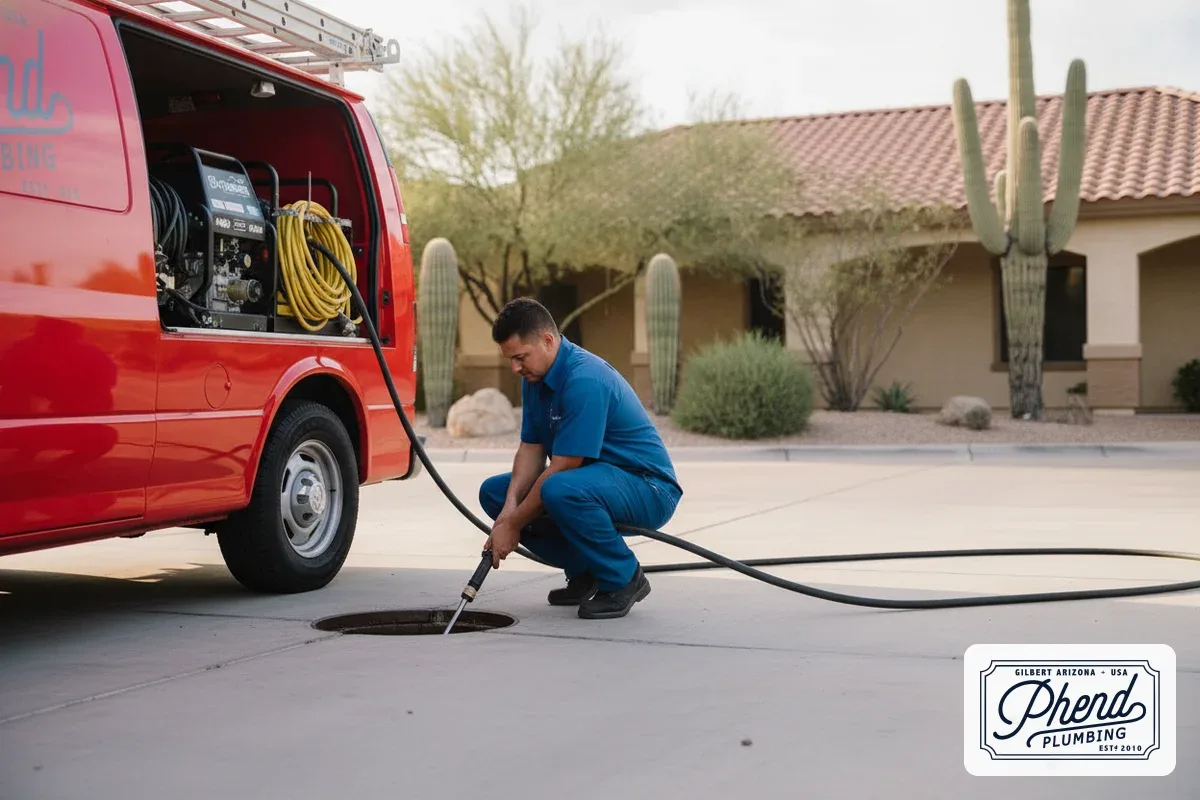
A gas line installation for a pool heater is not a simple appliance hookup. It starts at the gas meter, runs through your yard (often through or alongside a slab foundation, or trenched through the caliche-heavy soil common in the East Valley), and terminates at the equipment pad with a properly sized connection, a manual shutoff valve, and a sediment trap.
Caliche is the hardest part of trenching in Scottsdale. That calcium carbonate layer sits anywhere from a few inches to a few feet below the surface, and it is nearly concrete-hard. An experienced crew comes prepared for it. We have run gas lines through yards where a shovel was useless and a jackhammer was the only option. That is normal in this market, and it is something to factor into your project timeline.
Every new gas line in Scottsdale must be permitted through the City and inspected before it goes into service. That means the work must be done by a contractor licensed through the Arizona Registrar of Contractors. Phend Plumbing holds AZROC license number 288046. We pull the permit, do the work, and schedule the inspection. You do not have to manage any of that.
The International Fuel Gas Code (IFGC), which Scottsdale adopts, requires a pressure test at 15 PSI held for a minimum of 30 minutes on every new gas line installation. That test happens before any appliances are connected. If the line holds pressure, it passes. If it does not, we find the problem and fix it before calling the inspector.
Sizing the Line Right: BTUs, Meter Capacity, and Whole-House Load
This is where a lot of homeowners get surprised. You cannot just run a half-inch line from the nearest gas stub-out and call it done. Gas line sizing is a calculation, not a guess.
The Pentair MasterTemp installation manual is explicit about this. Before installing the heater, you must verify that the gas meter can supply the heater’s BTU demand on top of everything else already connected to that meter. Your furnace, water heater, gas dryer, range, and any other appliances all share the same meter capacity. A pool heater is a high-demand appliance. It does not fit neatly into whatever headroom is left without a real load calculation.
Pipe diameter and run length work together. A longer run from the meter to the equipment pad creates more pressure drop. To compensate, you need a larger pipe diameter. Undersizing the pipe is the most common mistake on unlicensed gas line installs, and it causes exactly the kind of low-pressure condition that makes a pool heater cycle off on its safety shutoff before the pool reaches temperature. You end up with a heater that seems broken when the real problem is a gas line that cannot deliver what the appliance needs.
We size every line using the IFGC tables and the appliance manufacturer’s minimum supply pressure specs. If your existing meter cannot handle the added load, we coordinate with Southwest Gas on a meter upgrade before anything else happens.
The Permit and Inspection Process for Gas Work in Scottsdale, AZ
Let’s be direct about this. If a contractor offers to run your gas line without pulling a permit, walk away. In Scottsdale, that is illegal, it voids your homeowner’s insurance coverage for any gas-related incident, and it creates a serious problem when you try to sell the house.
The permit process through the City of Scottsdale Development Services involves submitting the scope of work, the pipe sizing calculations, and the appliance load information. Processing time varies but is typically a few business days for a residential gas line project. We handle the application.
Once the work is done, the line is pressurized to 15 PSI for the 30-minute hold test. We document the test with a calibrated gauge, and the City inspector verifies that documentation during the inspection visit. After the inspection passes, the appliances get connected and the system goes into service.
This process protects you. A gas line that passes a proper pressure test and a City inspection is a gas line you can trust.
From the Equipment Pad to the Outdoor Kitchen: Planning One Run That Does It All
Here is the part most homeowners do not think about until after the pool heater is already installed. You can run one properly sized trunk line from the meter to the backyard equipment area and branch off to every outdoor gas appliance at once.
Pool heater. Built-in grill. Fire pit. Side burner. All of it, fed from a single planned trunk line, with branch connections sized for each appliance. The IFGC requires a manual shutoff valve and a sediment trap at each appliance connection point. We install those at every branch.
Running one trunk line during a single project mobilization costs meaningfully less than running separate lines in separate projects. The trench gets dug once. The permit covers the full scope. The inspection happens once. If you are already planning a pool heater connection, it is almost always the right call to plan the outdoor kitchen and fire pit connections at the same time.
We plan the branch points during the design phase so every appliance connection is accessible and every line is sized for its specific load. The pool heater gets what it needs. The grill gets what it needs. Nobody is sharing a line that was only sized for one appliance.
Arizona’s extreme summer heat, with temperatures regularly pushing past 110 degrees Fahrenheit, also affects your equipment pad. Pipe materials, fittings, and appliance connections all need to be spec’d for the outdoor temperature range in Scottsdale. We use materials rated for the conditions here, not products designed for a milder climate.
Why East Valley Homeowners Choose Phend Plumbing for Gas Line Work
Phend Plumbing is a family-owned operation with offices in Mesa and Gilbert. Scottsdale is part of our regular service area, and our proximity in the East Valley means we can get to your property faster than a company dispatching from across the metro.
We hold AZROC license number 288046. Every gas line project we do is permitted and inspected. We do not cut corners on pressure testing, and we do not hand you a finished installation that has not been signed off by the City.
We also understand the specific conditions in the East Valley and Scottsdale that affect gas line work. The caliche soil. The slab foundations that require careful planning around existing utilities. The hard water at 300 to 500 parts per million that affects every water-connected appliance on your property, including the pool equipment that shares the equipment pad with your new heater. We have been doing this work in this market long enough to know what to expect and how to handle it.
We are not a national franchise. When you call us, you get the same crew and the same standards every time.
Ready to Make Your Backyard Permanent? Call Phend Plumbing Today
If you have been putting off the pool heater connection, the outdoor kitchen gas line, or the fire pit hookup, this is a good time to get it on the schedule. Scottsdale’s mild fall and winter seasons are when you actually want that pool warm and that grill ready to go.
Phend Plumbing handles the full scope: load calculation, permit application, trenching, pipe installation, pressure testing, and inspection coordination. One call gets the whole project moving.
Call us at (480) 388-6093 or reach out through phendplumbing.com to schedule a gas line consultation. We serve Scottsdale from our Mesa and Gilbert offices and we are ready to help you finish the backyard you have been building toward.
For additional context on gas line sizing and code requirements, the American Gas Association publishes consumer resources on residential natural gas systems that are worth reviewing before your consultation.
Based out of Mesa and Gilbert, we cover the full Phoenix metro, Phoenix, Gilbert, Scottsdale, and Queen Creek included. From gas line work and slab leak detection, every job comes with upfront pricing and no surprises. Reach us anytime at (480) 388-6093.