Stop hauling propane tanks. Get a permanent BBQ gas line.
Running propane tanks to your backyard grill is a habit most Mesa and Gilbert homeowners put up with until they realize it does not have to be that way. Phend Plumbing runs a permanent natural gas line from your existing supply to your patio, buries it per code, and installs the shutoff valve so your grill is always ready. Permitted, pressure-tested, and done right the first time. Call (480) 388-6093.
If you have been grilling off propane tanks in your Mesa or Gilbert backyard, you already know the two inconveniences: running low mid-cookout and making the propane exchange trip every few weeks. A permanent natural gas BBQ line from Phend Plumbing eliminates both. We run a gas line from your existing supply to wherever your grill or outdoor kitchen sits, bury it properly for an outdoor installation, and connect the shutoff valve so you control gas flow right at the patio. The full gas line services process applies: permit first, pressure test before any connection, city inspection, then you are done. Here is what the job actually looks like.
Why a permanent gas line beats propane for a backyard BBQ
The convenience argument gets made constantly, but the economics make just as strong a case once you do the math on what propane costs you over a few years of regular grilling.
Propane exchange programs charge per tank fill regardless of how much gas remains when you swap. If you grill two to three times a week through an East Valley spring and fall, which can stretch from October through May out here, you are going through tanks regularly. Natural gas from Southwest Gas costs less per unit of energy than propane at typical East Valley utility rates. The difference is not dramatic per cookout, but it adds up across a full grilling season.
The more immediate benefit is that the line is always there. No running out of gas with guests already outside. No keeping a spare tank in the garage. Your grill connects to the house supply, the same supply that runs your water heater and range, and you turn the shutoff valve at the patio to control it.
For homeowners building out a full outdoor kitchen with a grill, side burners, a pizza oven, or a patio heater, a permanent gas line is not optional anyway. A propane setup for an outdoor kitchen with multiple appliances becomes complicated and expensive fast. One buried natural gas run feeds everything.
What the installation looks like from estimate to inspection
Most East Valley homes already have a natural gas main running through the house. The starting point is identifying where that supply is relative to where you want the outdoor connection, and then planning the route.
Permit first. Before Phend digs anything, the permit is pulled with your city. In Mesa and Gilbert, residential gas line permits for outdoor work are straightforward and typically process within a few business days. Phend handles the application as part of the job.
Trenching the run. The gas line from your interior supply to the outdoor connection point goes underground. In most East Valley backyards, the trench runs along the side of the house or across the rear yard to reach the patio. This is where Arizona's caliche soil comes into play: the hardpan layer under most East Valley yards can be dense and difficult to cut through, which is why trenching is quoted as part of the estimate after Phend walks the route. The trench depth is code-specified for buried gas pipe.
Pipe material. Underground runs use polyethylene gas pipe rated for direct burial. Where the line transitions from underground to above grade at the patio connection point, it transitions to a rigid riser, typically black iron or CSST depending on the application, with a shutoff valve and the flexible appliance connector for your grill.
Pressure test. Before anything connects, Phend pressure-tests the entire run. The test holds the line above operating pressure for a timed period. A pressure drop means a leak somewhere that gets found and fixed. If the test holds, the city inspector signs off and the grill can connect.
Final connection. The grill connects to the patio shutoff with a code-compliant flexible appliance connector. Phend leak-checks the final connections with a detector or soapy solution before calling the job complete.
Can you use a gas grill designed for propane on a natural gas line?
This is the most common question homeowners ask after deciding to put in a permanent line, and it is worth addressing directly.
Most grill manufacturers make their grill bodies in both a propane version and a natural gas version. The burners, orifices, and pressure regulators are sized differently for each fuel type because natural gas and propane operate at different delivery pressures. A propane grill connected directly to a natural gas line will run poorly: the orifices are too small for natural gas flow and the regulator is sized for propane pressure.
The solution is either to buy a grill with a natural gas conversion kit from the manufacturer, or to purchase a grill that was designed for natural gas from the start. Most major grill manufacturers offer natural gas versions of their popular models, and many offer official conversion kits for propane-to-natural-gas conversion on compatible models.
Phend's scope ends at the shutoff valve and flexible appliance connector at the patio. The grill itself and any conversion kit are the homeowner's responsibility. But this is the conversation to have before the line goes in, not after, so you are buying the right grill for the connection you are building.
Outdoor kitchens and multi-appliance patios
A single gas line stub-out works fine for one grill. If you are building a full outdoor kitchen or adding multiple gas appliances to a patio, the design changes.
Multiple gas appliances on the same line mean higher total BTU load, which affects the pipe sizing for the run. A line that is correctly sized for a single grill may not have enough capacity for a grill, a side burner, and a patio heater running simultaneously. Phend calculates the total connected load before sizing the pipe to make sure capacity is there for everything you are putting out there.
For outdoor kitchens specifically, the typical approach is to run one main line from the house supply to the island, then branch from there to each appliance connection point within the island. Each branch gets its own shutoff valve so individual appliances can be turned off independently. This approach is cleaner than running separate lines for each appliance and is the standard for outdoor kitchen gas systems.
If you are working with a contractor on a hardscape or outdoor kitchen build, Phend can coordinate the gas line timing so the trench is open when the hardscape contractor needs it and the line is in place before concrete or stone work goes over it. That coordination matters because trenching through finished hardscape costs significantly more than trenching before it is built.
What a backyard gas line adds to your home's value
A permanent natural gas line to the backyard is a tangible improvement to the property. It is not the same as a paint color or a light fixture upgrade that is about aesthetic preference. It is infrastructure that becomes part of the home and transfers to the next owner.
In the East Valley's outdoor-living culture, where backyard entertaining is year-round and the market for outdoor kitchens is strong, a gas-ready patio is a selling feature. Buyers who want to grill on natural gas or build out an outdoor kitchen do not have to plan a gas line project; it is already done.
From a practical standpoint, the investment in a buried outdoor gas line typically pays for itself in avoided propane costs over a reasonable time horizon, though the timeline depends on how much you grill and what propane is running per exchange in your area. The ongoing cost of natural gas from Southwest Gas replaces the ongoing cost of propane exchange.
Call Phend Plumbing for BBQ gas line installation in Mesa and Gilbert
Phend Plumbing serves Mesa, Gilbert, Chandler, Tempe, Queen Creek, and the full East Valley for outdoor gas line installation. If you are ready to stop running propane tanks and put in a permanent line, call (480) 388-6093 to schedule a free estimate visit. Phend walks the route, sizes the run, and gives you a written estimate covering everything from trenching through the permit and final inspection. No work starts until you have seen the full cost in writing.
Common questions
How much does a BBQ gas line installation cost in the East Valley?
Cost depends on the length of the run from your interior gas supply to the outdoor patio connection, the complexity of the trench route, whether caliche hardpan requires additional excavation effort, and the permit fee for your city. Short runs in homes where the gas supply is close to the back of the house cost less than longer runs across a large yard. Phend does not quote gas line projects over the phone because the route is the main cost driver. Call (480) 388-6093 to schedule a free estimate visit and you will have a written quote that covers everything before any work begins.
Do I need to replace my propane grill to use a natural gas line?
Most likely, yes, or you will need a manufacturer-approved conversion kit. Propane grills and natural gas grills use different orifice sizes and pressure regulators because the two fuels operate at different pressures. A propane grill connected directly to a natural gas supply will not burn correctly. Most major grill manufacturers offer their popular models in natural gas versions and many offer official conversion kits for compatible models. Phend installs the gas line and the patio shutoff valve. The grill selection and any conversion kit are the homeowners responsibility, and we recommend confirming your grill is natural-gas compatible before the line goes in.
Does a backyard gas line require a permit in Mesa or Gilbert?
Yes. Outdoor natural gas line extensions require a permit and a city inspection in Mesa, Gilbert, and every other East Valley city. Phend pulls the permit as a standard part of every outdoor gas line project. The permit triggers the final city inspection that confirms the installation meets current code. An unpermitted gas line is a liability at your closing table and can complicate homeowners insurance claims. The permit cost and timeline are included in your written estimate before any trenching starts.
How deep does a backyard gas line need to be buried?
The required burial depth for natural gas pipe is specified by the International Fuel Gas Code and your local AHJ. In the East Valley, residential gas pipe is typically required to be buried at a minimum depth that provides adequate protection from damage. Phend trenches to the required code depth on every outdoor gas line project and documents the depth for the city inspection. Do not rely on a gas line that has been shallow-buried or run along the surface of the yard. Buried per code protects the pipe from damage during landscaping work, irrigation projects, or future yard excavation.
Can Phend coordinate the gas line with my outdoor kitchen or hardscape contractor?
Yes, and we recommend it. The best time to trench for a buried gas line is before any hardscape, concrete, or stonework goes over the area. Trenching through finished pavers or concrete costs significantly more than trenching through an unfinished yard. If you are working with a hardscape or outdoor kitchen contractor, Phend can schedule the gas line work to coincide with the open ground phase of the project. Call (480) 388-6093 to coordinate timing.
Free estimate. Written quote before any work starts.
Phend walks the route from your gas supply to the patio, accounts for the trench and any caliche, and gives you a complete written estimate covering the line, the permit, and the pressure test. No work starts until you have seen the full cost.
- Permit pulled in Mesa, Gilbert, and all East Valley cities
- Buried per code with proper depth for protection
- Pressure-tested before the grill connects
- Outdoor kitchen multi-appliance sizing available
Pete on outdoor gas lines and backyard living in the East Valley.
How a permanent BBQ gas line changes the math on a backyard setup, what permits cover you, and how to plan a gas run for a full outdoor kitchen.
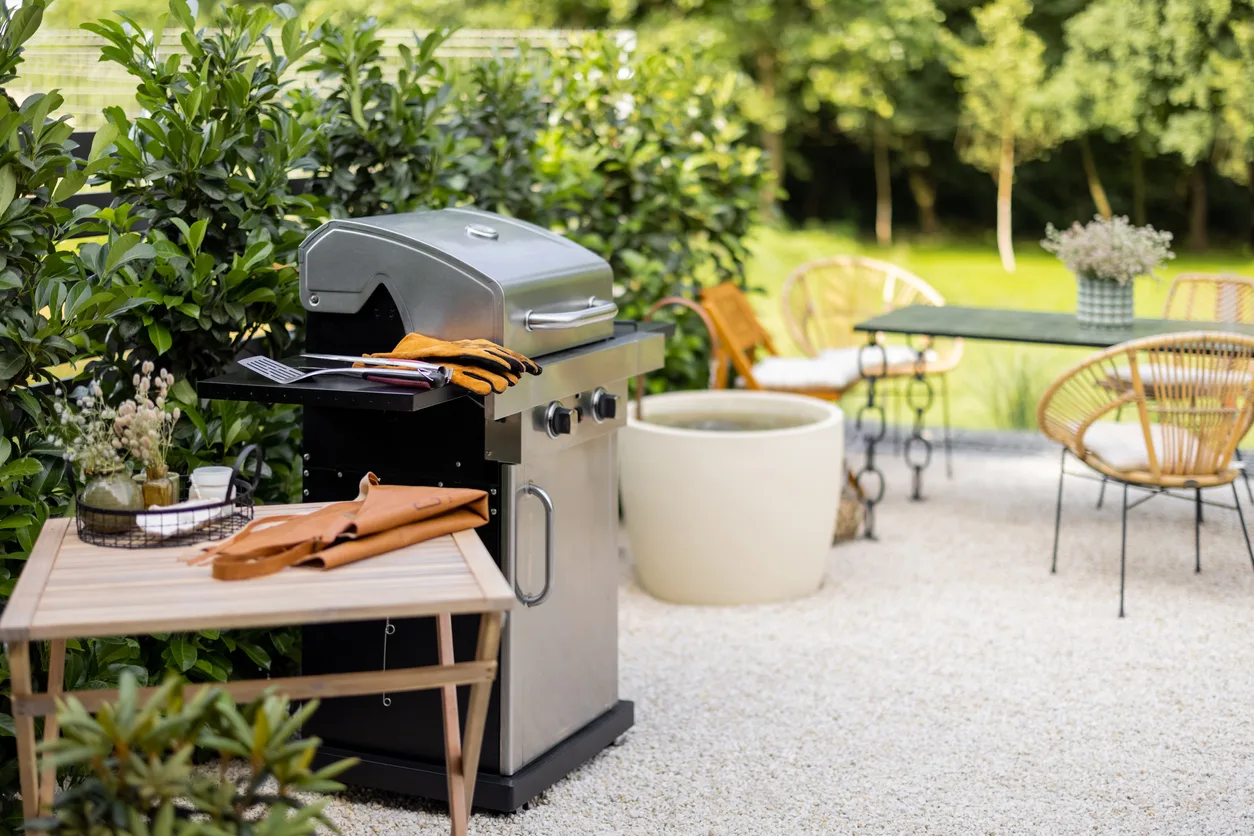
Natural gas BBQ vs. propane: which is right for your patio?
Running propane tanks gets old fast. Pete compares the real cost of a permanent natural gas line against the ongoing propane expense across a full East Valley grilling season.

Gas line permits: what East Valley homeowners need to know.
Skipping a permit on a gas line is one of the costliest mistakes an East Valley homeowner can make. Pete explains what the permit process covers and why it protects you.