A fire pit that is always ready. No propane tanks, no refills.
East Valley nights cool down enough from October through April to make an outdoor fire pit the best seat in the yard. But a propane fire pit means keeping tanks filled and swapping them when they run dry in the middle of a gathering. A permanent natural gas line from Phend Plumbing eliminates all of that. One buried line from your existing supply to the fire pit location. Permitted, pressure-tested, and built to last. Call (480) 388-6093.
If you have a fire pit or outdoor fireplace on your Mesa or Gilbert patio that runs on propane, you already know the ritual: checking the tank before guests arrive, keeping a spare in the garage, and the embarrassment of the flame dying mid-evening because you forgot to swap. A permanent natural gas line from Phend Plumbing ends that routine. We run a gas line from your existing supply to wherever the fire feature sits, bury it per code, install the shutoff valve, and pressure-test the whole run before the burner connects. That is the full gas line services scope from a crew that does this regularly in the East Valley.
Why East Valley homeowners choose natural gas for fire pits and outdoor fireplaces
The East Valley's outdoor living culture runs year-round in a way that other climates do not. The intense summers push most patio activity to the morning hours, but from October through April, nights drop into the 50s and 60s and outdoor fires become genuinely useful for warmth and ambiance, not just decoration.
No tank management. A propane fire pit means keeping a supply of tanks on hand, checking the level before every use, and making the exchange run every few weeks during heavy use periods. Natural gas from Southwest Gas is always available at operating pressure. You turn the shutoff valve, ignite the burner, and the fire runs as long as you want it to without any tank management.
Lower ongoing cost. Natural gas has historically cost less per unit of energy than propane in the East Valley. The ongoing cost of running a fire pit on natural gas is lower than running the same burner on propane exchange. The savings per hour of use are not dramatic, but across a full October-to-April outdoor season with regular use, they add up.
Aesthetics and permanence. A fire pit connected to a buried gas line looks clean. No propane tank sitting next to the feature, no hose running across the patio, no tank access panel built into the surround. The gas comes up through a riser at the fire pit location and connects directly to the burner assembly. The setup integrates with the hardscape and does not date the space the way a visible tank does.
For outdoor fireplaces, natural gas is even more common because a fireplace surround is a permanent structure that is built around a gas insert from the start. Running a gas line during the construction phase of an outdoor fireplace project is the standard approach.
What the installation involves
A fire pit or outdoor fireplace gas line installation follows the same process as any other outdoor gas line job, with a few specifics that apply to the fire feature application.
Planning the route. Phend walks the yard to assess the route from the interior gas supply to the fire pit location. The supply is typically near the water heater, furnace, or range. The route needs to clear irrigation lines, landscape features, and any hardscape that is already in place. In homes where the fire pit is in a corner of the yard far from the house, the run can be longer than expected. Phend accounts for the full route in the estimate.
Trenching and East Valley caliche. Underground gas lines go in a trench at code-specified depth. Most East Valley yards have a caliche hardpan layer somewhere below the surface, and that layer can be dense and difficult to cut through depending on depth and composition. Phend assesses the likely soil conditions when walking the route and includes any additional excavation effort in the estimate. This is a variable that changes the cost between a simple trench and one that requires more work to get through the hardpan.
Pipe material. Underground runs use polyethylene gas pipe rated for direct burial. The transition from underground to above grade at the fire pit uses a rigid riser (black iron or CSST depending on the application) that connects to the shutoff valve and the flexible appliance connector for the burner assembly.
Shutoff valve placement. The shutoff valve serves two purposes: it controls gas flow to the fire feature, and it provides a way to quickly cut off gas in an emergency. Phend installs the shutoff valve in a location that is accessible and visible, typically at the riser near the fire pit, rather than buried or hidden where it would be hard to reach.
Pressure test and final connection. Same as every gas line job: the line is pressure-tested before anything connects. After the test passes and the city inspection signs off, the burner assembly connects to the shutoff valve via the appropriate flexible connector. Phend leak-checks all connections before completing the job.
Fire pit and outdoor fireplace specifics
A few details that apply specifically to fire pit and fireplace gas line installations are worth covering separately.
Existing fire pit burner kits. Many East Valley homeowners purchase a natural gas fire pit insert or burner kit before calling for the gas line, which works fine. When this is the case, share the burner kit specifications with Phend at the estimate visit. The gas inlet size, the BTU rating, and any proprietary connector requirements affect how the final connection is made at the burner. Phend sizes the final connector to the kit manufacturer's specifications.
Outdoor fireplaces during construction. If an outdoor fireplace is being built from scratch, coordinate the gas line timing so Phend runs the line before any masonry or stonework closes over the area. Trenching through finished pavers or concrete hardscape costs significantly more than running the line during the open-ground phase of construction. Phend can work with your contractor to schedule the gas line as an early-phase item.
Fire pit placement and gas pool risk. One code consideration for propane fire features is less relevant for natural gas: propane is heavier than air and can pool in low-lying areas, which affects where propane fire features can be located. Natural gas is lighter than air and disperses upward if there is a leak, which gives it a more favorable safety profile for most placement locations. Your gas burner kit documentation may have specific clearance requirements from overhanging structures; those come from the burner manufacturer and Phend will confirm compliance during the final connection.
Timing the installation around monsoon season
The East Valley monsoon season runs roughly July through September. If you are planning a fire pit gas line and a backyard project that involves open trenching, timing matters.
Monsoon storms can dump significant rainfall quickly, and an open trench in a backyard can flood within minutes of a storm. Phend schedules outdoor trenching jobs to minimize the window between open trench and backfill. For larger projects where the trench needs to stay open for another contractor's work (hardscape, for example), the timing of the gas line is planned around the monsoon calendar when possible.
The good news is that a completed and properly buried gas line has no monsoon vulnerability. The pipe is rated for direct burial, the connections at the riser are above grade, and the shutoff valve is accessible regardless of weather. Once the job is done and the trench is backfilled, monsoon season does not affect the gas line.
The best window for scheduling a combined backyard gas line and hardscape project is spring (March through May) or fall (October through November), when the ground is dry, caliche is easier to work through, and you avoid both monsoon season and the worst of the summer heat for the installation crew.
Permits and what they protect
Outdoor fire pit and fireplace gas line installations require a permit in Mesa, Gilbert, and all East Valley cities. This is the same rule that applies to any new gas line extension.
The permit triggers the city inspection that confirms the run meets current code: correct pipe material for underground installation, correct burial depth, proper shutoff valve placement and accessibility, and a documented pressure test. The inspection record becomes part of your home's permit history.
An unpermitted outdoor gas line creates problems if you sell your home. A buyer's inspection may flag it, and bringing it into compliance after the fact means tearing up finished hardscape or landscaping to access the buried pipe. The permit process adds a few business days to the project timeline, but it protects the installation for the life of the home.
Phend handles the permit application as a standard part of every outdoor gas line job. The permit fee is included in the written estimate before any work starts.
Call Phend Plumbing for outdoor fire pit gas line installation in Mesa and Gilbert
Phend Plumbing serves Mesa, Gilbert, Chandler, Tempe, Queen Creek, Scottsdale, and the full East Valley for outdoor fire pit and fireplace gas line installation. If you are ready to put a permanent gas line to your fire feature or planning a new outdoor fireplace build, call (480) 388-6093 to schedule a free estimate visit. Phend walks the yard, plans the route, accounts for caliche and soil conditions, and gives you a written quote covering everything from trenching through the permit and final inspection before any work starts.
Common questions
How much does a fire pit gas line installation cost in the East Valley?
Cost depends on the length of the run from your interior gas supply to the fire feature location, the soil conditions along the trench route (caliche hardpan affects excavation difficulty), and the permit fee for your city. A fire pit close to the back of the house with a short trench costs less than a fire feature at the far corner of a large lot with a long run through dense caliche. Phend walks the yard and quotes the job after seeing the route. Call (480) 388-6093 to schedule a free estimate visit.
Does a fire pit gas line require a permit in Mesa or Gilbert?
Yes. Any new natural gas line extension for an outdoor fire pit or fireplace requires a permit in Mesa, Gilbert, and all East Valley cities. Phend pulls the permit as part of every outdoor gas line project. The permit triggers the city inspection that confirms the installation meets code. An unpermitted gas line is a liability if you sell your home, because it surfaces during buyer inspections and may require costly re-work through finished hardscape to bring into compliance. The permit fee and timeline are included in your written estimate.
Can I use a propane fire pit burner on a natural gas line?
Most fire pit burner kits are designed specifically for either propane or natural gas and are not interchangeable without a conversion kit. Propane and natural gas operate at different pressures and require different orifice sizes. If your existing burner kit is propane-only, check with the manufacturer for a natural gas conversion kit or a natural-gas-rated replacement. If you are purchasing a new burner kit for a permanent natural gas installation, buy the natural gas version from the start. Share the kit specifications with Phend at the estimate visit so the final connection is made to the correct inlet size and pressure rating.
How deep does the gas line need to be buried for an outdoor fire pit?
The required burial depth for outdoor residential gas pipe is specified by the International Fuel Gas Code and the local AHJ. Phend trenches to the required code depth and documents it for the city inspection. In East Valley yards, the presence of caliche hardpan at various depths can affect where the trench hits solid layer, which is one reason Phend walks the route before quoting. The minimum burial depth requirement ensures the pipe is protected from damage during any future landscaping, irrigation, or yard work over the area.
When is the best time of year to install an outdoor fire pit gas line in the East Valley?
Spring (March through May) and fall (October through November) are the best windows. You avoid both monsoon season (July through September), when open trenches can flood quickly, and the worst of summer heat for the installation crew. If your project involves coordinating with a hardscape or outdoor kitchen contractor, planning the gas line as an early-phase item before any paving or stonework closes over the trench route is the most cost-effective approach regardless of season. Phend can schedule around your project timeline. Call (480) 388-6093 to discuss.
Free estimate. Phend walks the yard and quotes the full run.
Route, soil conditions, caliche, trench length, permit, and final connection — all accounted for in one written estimate before any work starts. Phend does not quote outdoor gas line jobs without seeing the yard first.
- Permit pulled in Mesa, Gilbert, and all East Valley cities
- Buried per code, correct depth documented for inspection
- Caliche and soil conditions assessed at estimate visit
- Pressure-tested and leak-checked before the burner connects
Pete on outdoor gas lines and East Valley backyard living.
How a permanent fire pit gas line changes the patio experience, why permits protect you when you sell, and what East Valley summers mean for outdoor plumbing and gas runs.
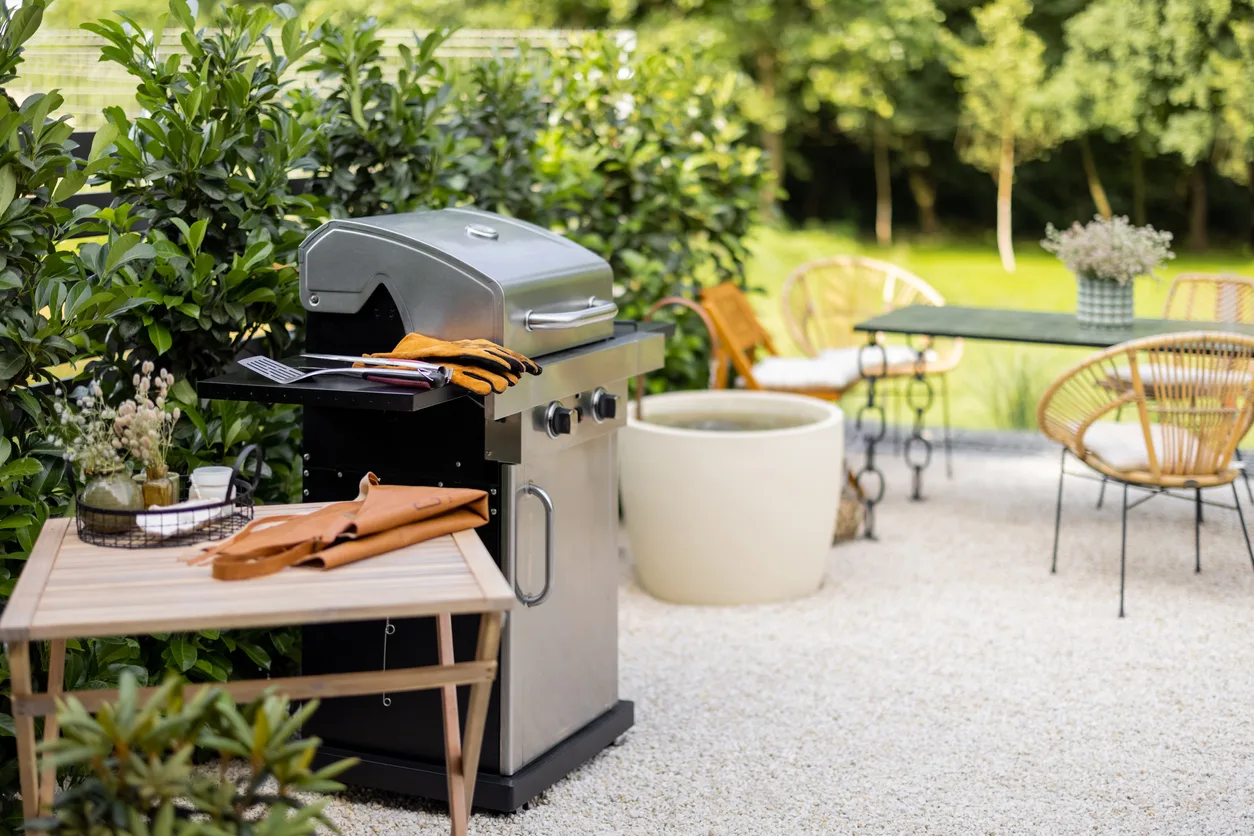
Natural gas BBQ vs. propane: which is right for your patio?
The same permanent-line vs. propane comparison that applies to a BBQ applies directly to a fire pit. Pete explains the cost and convenience math for East Valley outdoor living.

Gas line permits: what East Valley homeowners need to know.
Skipping a permit on an outdoor gas line is one of the costliest mistakes an East Valley homeowner can make. Pete explains what the permit process covers and why it protects you at the closing table.
Ask Pete: how to maintain outdoor plumbing in an Arizona summer.
Arizona summer heat, monsoon runoff, and caliche soil all affect outdoor plumbing and gas line installations. Pete covers what to keep an eye on when temps hit 110.