Sewer camera inspection for East Valley peace of mind.
You cannot fix your sewer line correctly without knowing what is actually wrong with it. Phend Plumbing sends a waterproof camera through your main before recommending any repair, so the footage tells the story and you make an informed decision.
A sewer camera inspection is the one step that makes every other sewer decision easier. If you live in Mesa or Gilbert, your home connects to the city sewer through a main line that most homeowners have never looked inside. Phend Plumbing threads a fiber-optic camera through your cleanout, records everything on video, and shows you exactly what is happening inside that pipe in real time. Root intrusions, grease deposits, cracked joints, offset sections, and corroded cast iron all show up clearly on screen. This is where every sewer job at Phend starts, and it is the first step in our full sewer services offering.
When East Valley homeowners need a camera inspection
The trigger is usually a symptom you cannot explain. Slow drains across multiple fixtures, a gurgling toilet when the washing machine drains, sewage odor rising from the yard or a floor drain, or a wet spot in the lawn that has no obvious source. Any of those signs points to the main sewer line, and the camera is the fastest way to know if you have a blockage, structural damage, or something else entirely.
Pre-purchase inspections are the other major reason. If you are buying a home in Mesa, Gilbert, Chandler, or anywhere in the East Valley, a sewer camera inspection before closing is one of the most valuable things you can do. It is not part of a standard home inspection. The general inspector walks the property and looks at visible systems. The camera goes into the pipe and shows you what is inside. For a home built before 1985, this is not optional in our view.
You might also schedule an inspection on a home you already own if it has been more than 5 years since anyone looked at the line, if you just had a major root clearing done and want to confirm pipe condition, or if you are planning a significant renovation that involves the sewer system. Phend recommends a camera look after any major hydro-jetting job so you have documented pipe condition on file.
What a sewer camera inspection actually shows
The camera feeds a live image to a monitor that both the technician and you can watch. What it shows depends on what is in your pipe, and what it finds determines every recommendation that follows.
Root intrusions appear as fibrous masses threading in through joint gaps. Fine hair roots look different from thick root balls. The footage tells us whether a cleaning will clear them or whether the joint is already compromised.
Grease and scale buildup appears as narrowing along the pipe walls. In older cast iron lines, interior corrosion and mineral scale from East Valley hard water (300 to 500 parts per million) can reduce flow capacity dramatically over decades. This is different from a grease clog in a kitchen drain and needs a different approach than drain cleaning of a fixture line.
Cracked or broken pipe sections show up as daylight gaps or misalignment in the pipe wall. A hairline crack in intact pipe might call for spot sewer line repair. A collapsed section calls for a different conversation altogether.
Offset joints are a common finding in pre-1985 East Valley homes. Clay tile sewer mains are connected at barrel joints that shift over time as the soil moves. Monsoon-season soil expansion from July through September causes the clay sub-base to move. An offset joint is a gap where two sections no longer align, which allows roots in and slows flow.
Pipe material and condition are both confirmed by camera. The image tells us whether you have cast iron, clay, ABS, or PVC, and how far along the deterioration is. That matters because the right repair for a 50-year-old cast iron main is not the same as the right repair for a cracked PVC section in a 2004 home.
How the inspection works, step by step
A Phend camera inspection is typically a two-hour visit for a standard single-story East Valley home. Here is what happens from the time the technician arrives.
Step 1: Locating the cleanout. Your main sewer line has a cleanout access point, usually a capped pipe near the foundation or in the front yard. Phend locates the cleanout and opens it for camera access. If no accessible cleanout exists, we can typically pull a toilet to access the line through the drain opening.
Step 2: Inserting the camera. A waterproof fiber-optic camera on a flexible push rod goes into the cleanout. The camera is self-leveling and records continuous video with a timestamp and distance counter. You can watch the feed in real time on the monitor.
Step 3: Reading the footage. As the camera travels through your line, the technician narrates what is visible. You see every section of pipe, every joint, and any anomalies the camera encounters. Distance markers on the rod tell us exactly how far into the line each finding is located.
Step 4: Recording the findings. The full inspection is recorded. If anything warrants a repair quote, the technician marks the footage at the relevant timestamp and notes the distance from the cleanout. That documentation is what makes a written repair estimate accurate rather than approximate.
Step 5: Reviewing options with you. Once the camera is out, Phend walks you through what the footage showed and what it means. If the pipe is clean and sound, you get documented confirmation. If there is a problem, you get a clear explanation of the repair options: cleaning via sewer cleaning, targeted spot repair through sewer line repair, or trenchless sewer repair if the line needs more comprehensive work. No pressure, no upselling. The footage tells us what the pipe needs and we tell you.
Step 6: A written report before you leave. You receive a written summary of findings with the footage available for your records. If you need to submit documentation to a real estate agent, an insurance carrier, or a second-opinion plumber, you have it.
Pre-purchase camera inspection for buyers
If you are in escrow on an East Valley home, the standard home inspection almost certainly did not include the sewer line. General inspectors check what they can see. The sewer main runs underground from your home to the street and is invisible to any above-ground inspection. That pipe could be in perfect condition. It could also have root intrusion, corroded joints, or a partially collapsed section that will cost thousands to fix after you close.
Phend recommends scheduling a pre-purchase camera inspection any time you are buying a home more than 10 years old in Mesa, Gilbert, Chandler, Tempe, Scottsdale, or anywhere in the East Valley. We can typically fit a pre-purchase inspection into a 2 to 3 day window during your inspection contingency period. Most buyers share the inspection report with the seller and use findings as a negotiating point or a reason to request a credit at closing.
For homes built before 1985, this step is especially important. The pipe material in those homes is almost certainly cast iron or clay (see our sewer services hub for the full pipe-by-era breakdown). Both materials are now 40 to 60 years old. A camera tells you whether the line is functioning well, showing early wear, or already failing.
The cost of a camera inspection is almost always a small fraction of what sewer line repair or replacement costs after the fact. Most buyers who discover a failing line before closing have leverage they would not have after the deed transfers.
Why pre-1985 Mesa homes especially benefit
Mesa was one of the fastest-growing cities in the country through the 1960s, 1970s, and early 1980s. Entire neighborhoods in central and west Mesa were built during this period, all on slab foundations with sewer mains made from cast iron or clay tile. Those pipes are now between 40 and 65 years old.
Cast iron corrodes from the inside. East Valley water at 300 to 500 ppm of dissolved minerals accelerates that corrosion. Over decades, the pipe interior develops a rough, scaled surface that catches grease and debris more easily, reducing the effective diameter of the line. Eventually, sections crack or collapse under the weight of the soil above them.
Clay tile is a different failure mode. Clay joints were sealed with lead wool or rubber gaskets during installation. Those seals degrade over time. Once the joint is no longer sealed, roots follow the moisture gradient and thread in through the gap. Arizona extreme summer heat (110 degrees at the surface means the soil below heats significantly too) combined with monsoon-season moisture creates ideal conditions for root growth cycles that stress clay joints repeatedly each year.
A camera inspection on a pre-1985 home in Mesa gives you one of three outcomes: confirmation that the line is aging but functional, identification of one or two problem sections that need spot sewer line repair, or documentation of widespread deterioration that makes a full trenchless reline the practical choice. All three outcomes are useful. The one outcome that hurts homeowners is discovering a failing line in the middle of a sewage backup instead of on a scheduled inspection call.
What you receive after the inspection
You leave a Phend camera inspection with more than a verbal summary. Here is what Phend provides at the end of every camera visit.
Video footage. The full inspection recording is yours. You can share it with a real estate agent, a second-opinion plumber, an insurance adjuster, or just file it with your home maintenance records. Having dated footage of your sewer line condition is something most East Valley homeowners have never had before. If a problem develops two years from now, you will have a baseline to compare against.
A written findings summary. The technician notes every finding by distance from the cleanout, the pipe material, and the overall condition rating. If there are no problems, the report says that clearly. If there are, it describes them in plain language, not trade jargon.
A repair quote where applicable. If the camera found anything that warrants a follow-up service, you get a written quote for that work before you leave. Phend does not call back later with a number after you have had time to think about it. The quote is on paper the same day.
Documentation for your insurance company. If the findings suggest sewer line damage that may be covered under a home warranty or homeowners policy, Phend written report is formatted for submission. We can also note pre-existing conditions that exempt future repairs from claim disputes.
What happens after we find a problem
A camera inspection that finds a problem is not bad news. It is the information you need to make the right repair decision, and Phend makes that decision straightforward.
If the camera shows a blockage in otherwise sound pipe, the next step is sewer cleaning using hydro-jetting or mechanical clearing. Most homeowners with relatively new PVC or ABS pipe and a simple root or grease blockage are done after a thorough cleaning. In many cases, Phend can perform the cleaning on the same visit as the inspection.
If the camera shows one cracked section, offset joint, or isolated point of failure in pipe that is otherwise intact, spot sewer line repair is the targeted fix. We excavate only the damaged section, replace it, and backfill. You are not paying to replace a whole line when one section is the problem.
If the camera shows widespread corrosion, multiple offset joints, or a long section of collapsed or badly cracked pipe, trenchless sewer repair becomes the most cost-effective option for most homeowners. Cured-in-place pipe lining installs a resin liner inside the existing pipe without digging a trench across your yard. Pipe bursting replaces the old line by pulling a new pipe through it. Both methods preserve your landscaping and hardscape.
Phend keeps the inspection and repair within the same crew. The technician who ran the camera communicates the exact findings to the repair team. There is no handoff gap, no re-explanation, and no second diagnostic visit. From camera to completion, you deal with one company and one point of contact.
Pricing and scheduling
Phend does not publish a flat camera inspection rate because the scope varies. Line length, cleanout accessibility, the number of runs to inspect, and whether footage review and a follow-up quote need to happen on the same visit all affect the time involved.
What we will tell you is this: the cost of a camera inspection is a small fraction of the cost of any sewer repair, and it is the only way to price sewer repair accurately. Any plumber who quotes sewer work without a camera is guessing. Phend does not do that.
For pre-purchase inspections, Phend can typically schedule within 48 to 72 hours, which fits inside most inspection contingency windows in the East Valley. For diagnostic inspections on your current home, we offer same-week scheduling in most cases.
Call (480) 388-6093 for a free estimate. We will ask a few questions about your home age, symptoms, and the access situation, and give you an honest scope and timeline before you commit to anything.
Phend sewer services all start here
A camera inspection is the first chapter of everything Phend offers in its sewer services. Whether a home ends up needing a simple cleaning, a targeted repair, or a full trenchless reline, the camera footage is what makes every subsequent recommendation defensible. Sewer camera inspection also connects naturally to slab leak detection. Both are diagnostic services where the goal is to know exactly what is happening before any cutting or excavation starts.
Recent work
Gallery

Common questions
Can a sewer camera find tree roots in the pipe?
Yes, and it is one of the most common findings on East Valley properties. The camera image shows root intrusions clearly, from fine hair roots threading in through a joint gap to thick root balls that are partially or fully blocking the line. The footage also shows the joint or section where the intrusion is occurring, which tells us whether cleaning will solve the problem or whether the joint itself is damaged and needs repair. Root intrusions in cast iron or clay pipe in pre-1985 Mesa and Gilbert homes are something Phend technicians see on a regular basis.
How deep into the sewer line can the camera see?
For most residential East Valley homes, the camera travels the entire run from the cleanout to the city main connection, which is typically 50 to 150 feet depending on where the home sits on the lot. The push rod reaches that distance in most standard residential runs. If the line is longer than average, or if the home has multiple sewer runs serving different sections of the house, Phend will scope each accessible run. We note the distance to every finding using the footage distance counter so you know exactly where each issue sits in the line.
What if the camera cannot get past a blockage?
A blockage that stops camera progress is itself a significant finding. It tells us the obstruction is complete or near-complete, which narrows the diagnosis considerably. In that situation, Phend typically recommends a clearing visit first, either hydro-jetting or mechanical snaking depending on what the partial footage suggests, followed by a second camera pass once the line is clear. The goal is always to get footage of the full run so any structural issues are not hidden behind the blockage. Phend can often do the clearing and the follow-up camera on the same service call. Call (480) 388-6093 and we will walk through the sequence for your specific situation.
Does the camera work in cast iron pipe?
Yes. The camera works in any pipe material: cast iron, clay tile, ABS, PVC, and concrete. In cast iron, the footage often shows the interior corrosion and scale buildup that develops in Arizona hard water over decades. That visual is actually useful because it shows the condition of the pipe wall, not just the presence of a blockage. Cast iron that is scaling heavily on the inside can still be flowing, but the footage tells us how close it is to the point where cleaning alone stops being a sustainable solution.
Can I get a copy of the video footage from the inspection?
Yes. Phend provides the footage to every customer as a standard part of the inspection. You can use it however makes sense for your situation: share it with a real estate agent or seller during a home purchase, submit it to an insurance carrier, show it to a second-opinion plumber, or simply keep it with your home maintenance records as a dated baseline. Having footage from a camera inspection done today is useful if a problem develops a few years from now, because you have documented pipe condition at a specific point in time.
What is the difference between a sewer camera and a drain camera?
A drain camera is typically a smaller, shorter-reach tool used to inspect individual fixture drain lines: a single sink, a shower drain, or a toilet drain. It is useful for locating a close-in blockage in a fixture line. A sewer camera is a longer, more robust tool designed to travel the full main sewer line from the cleanout to the city main connection. It is what Phend uses for sewer inspections. If your issue is a single slow drain that has not responded to cleaning, a drain camera might be the right tool. If you are looking at the main sewer line for a whole-house diagnostic or a pre-purchase evaluation, the sewer camera is what you need. Call us at (480) 388-6093 and describe your symptoms and we will tell you which scope of inspection fits your situation.
Does a sewer camera inspection come with a warranty or guarantee?
The camera inspection itself is a diagnostic service. It documents what is in your pipe on the day of the visit. Phend stands behind the accuracy of the footage and the written report. If Phend performs a repair based on camera findings, that repair work comes with its own warranty, which Phend will specify in the written quote before work starts. The camera findings are accurate to what the pipe showed on inspection day. Conditions in a sewer line can change, particularly in East Valley homes where monsoon-season soil movement and root growth are ongoing. Phend recommends periodic inspections rather than treating a single camera visit as a permanent clean bill of health.
How soon can Phend schedule a sewer camera inspection?
For pre-purchase inspections during escrow, Phend typically schedules within 48 to 72 hours, which fits the standard East Valley inspection contingency window. For diagnostic inspections on your current home, same-week scheduling is available in most cases. After-hours and weekend availability is limited but exists for situations where a camera inspection is needed urgently to diagnose an active drainage problem. Call (480) 388-6093 and give us the details of your situation. Phend is based in Mesa and Gilbert with technicians covering the full East Valley, so we are usually not far from wherever you are.
See your sewer line clearly before any work starts.
Every Phend sewer job starts with a camera. You watch the footage in real time, leave with a written report, and make repair decisions based on what the pipe actually shows. Serving Mesa, Gilbert, and the full East Valley.
- Full video recording of your sewer main, footage is yours to keep
- Written findings report formatted for real estate or insurance use
- Repair quote on the same visit when findings warrant it
- Pre-purchase inspections scheduled within 48 to 72 hours
Pete on sewer cameras and East Valley pipe.
Short reads on when to schedule an inspection, what trenchless repair actually involves, and the drain issues that send people to a camera first.
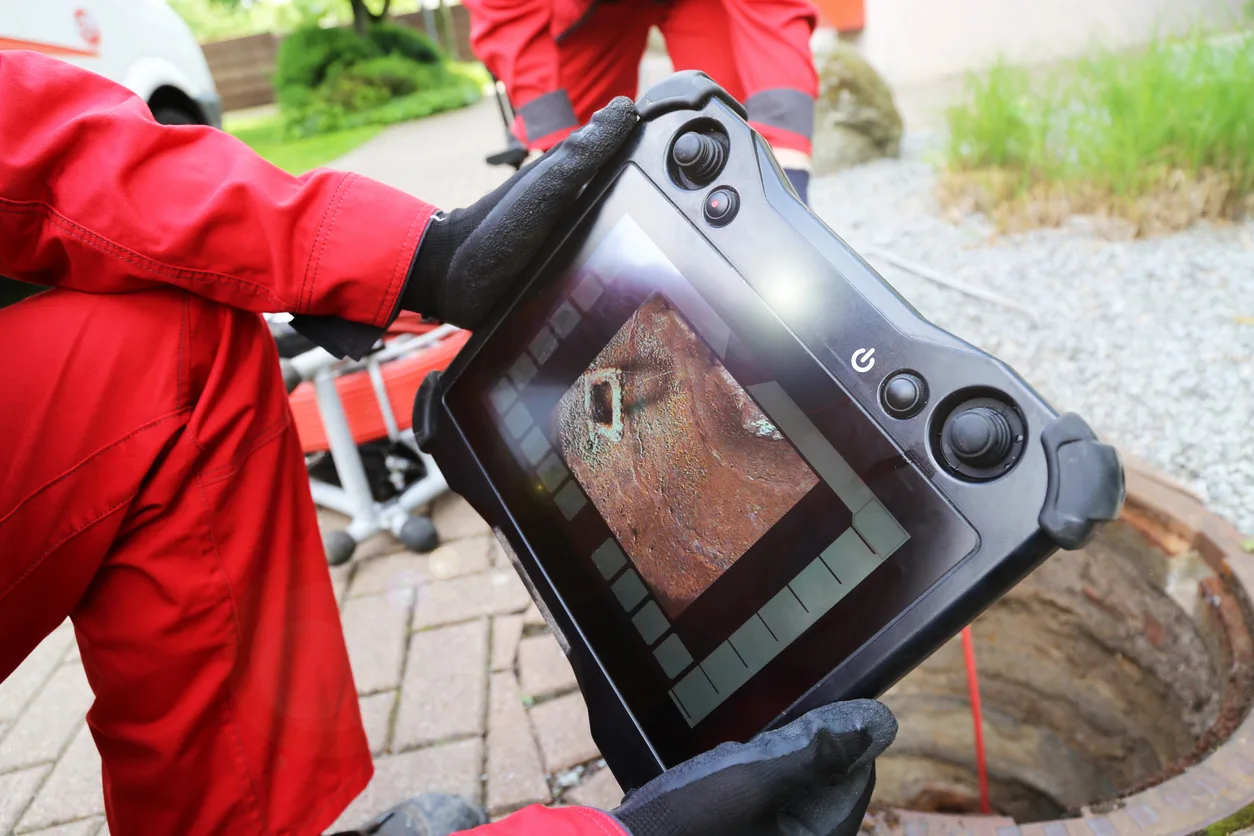
When to get a sewer camera inspection and why it matters.
Slow drains, a home purchase, or a main that has not been looked at in years are all good reasons. Pete walks through the signs that tell you a camera inspection is overdue.

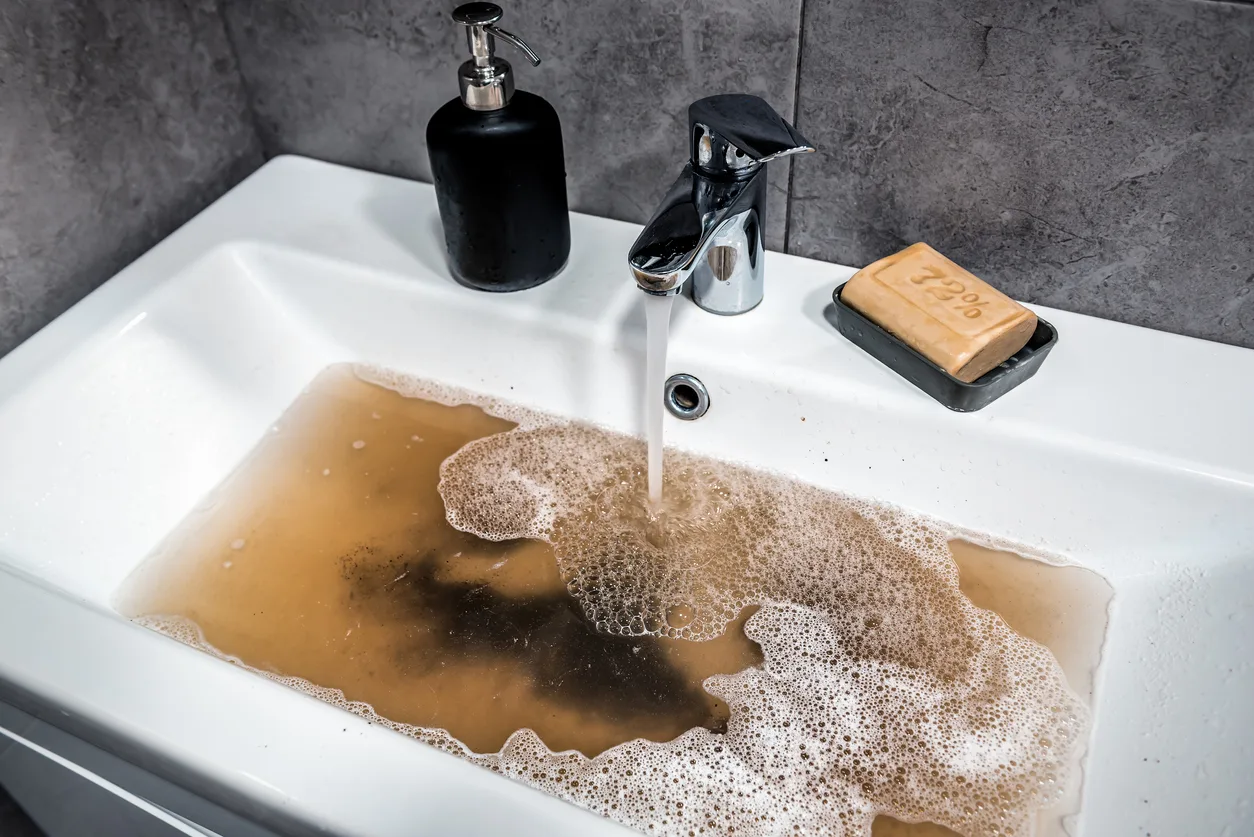
How do I prevent clogged drains? Pete explains.
Grease, hair, and wipes are the usual culprits. But in East Valley homes, hard water scale and aging pipe are the longer-term story. Here is what you can actually do about both.
Trenchless sewer repair explained by the plumbers who do it.
CIPP lining, pipe bursting, and when traditional excavation is still the better call. A plain-language breakdown from Phend Plumbing field crew.