Slab leak detection for East Valley foundations.
You cannot fix a slab leak until you know exactly where it is. Phend uses professional detection equipment to find the leak under your foundation without tearing up your floors first.
If you live in Mesa or Gilbert, your home almost certainly sits on a slab-on-grade foundation with copper supply pipes running directly through or beneath the concrete. Slab leak detection is the science of finding exactly where one of those pipes has failed, without opening up the wrong section of your floor. Phend Plumbing uses acoustic listening equipment, electronic leak detection sensors, and thermal imaging to pinpoint the leak location before any concrete is cut or any flooring is disturbed. We also locate the supply line manifolds so that rerouting, if needed, causes the least disruption possible.
Seven signs you might have a slab leak
Slab leaks rarely announce themselves with a burst pipe and a flooded garage. More often they start quietly, and the signs can be easy to attribute to something else. Here is what to watch for in an East Valley home.
- Your water bill jumped without an obvious reason. A slab leak running 24 hours a day can waste hundreds of gallons before you notice.
- You hear running water inside the walls or floors with every faucet, appliance, and irrigation zone off.
- You feel warm or hot spots on your tile or wood floor. A hot water line leak raises the floor temperature above the surrounding surface.
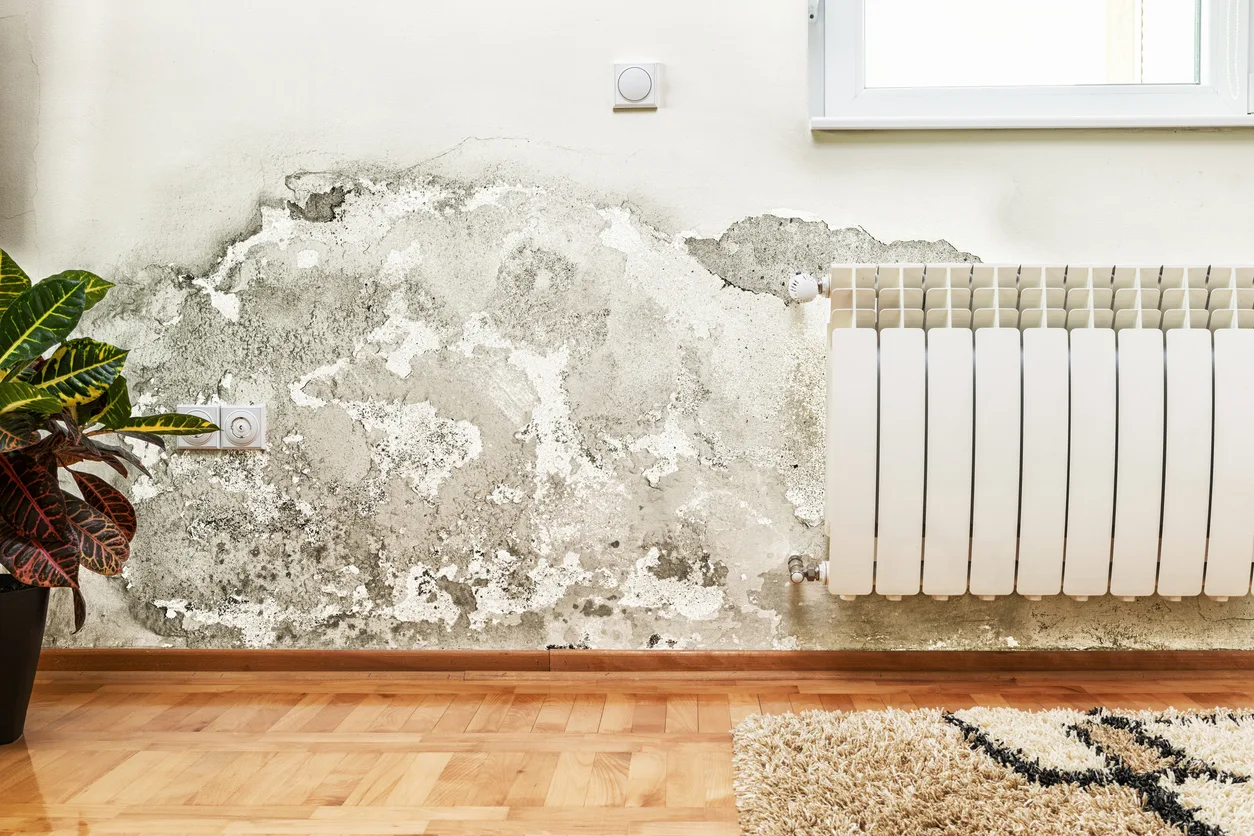
- You see damp or discolored flooring, buckled baseboards, or water stains on the lowest level of your walls.
- Water is seeping from your foundation perimeter or appearing in your garage slab.
- Your hot water runs out faster than normal or the water heater runs almost constantly. If the water heater is cycling more than usual, the system may be losing hot water to a leak underground.
- Your water pressure has dropped noticeably throughout the house without any changes to the system.
Two or more of these at the same time is a strong indicator. Call a plumber the same day rather than waiting to see if it resolves.
What causes slab leaks in East Valley homes
The short answer is that it almost always comes down to copper pipes. The supply lines under your slab are not leaking through the concrete. They are leaking through the pipe itself, and the water then migrates up through or alongside the slab until it shows up on your floors.
A few specific factors make East Valley homes particularly prone to this.
Hard water corrosion. Mesa and Gilbert municipal water consistently tests between 300 and 500 parts per million of dissolved calcium and magnesium. That mineral load corrodes copper pipe walls from the inside over time, creating pinhole leaks that start small and grow.
Thermal expansion from extreme heat. In summer, Arizona garages and crawl spaces reach 130 degrees or higher. Copper pipes expand when heated and contract when the water cools. After thousands of cycles over a decade or two, that movement creates stress fractures at fittings and joints. Arizona's temperature swings, from 110-degree summer days to 40-degree winter nights, are steeper than in most states.
High incoming water pressure. Pressure above 80 psi accelerates wear on pipe walls and fittings. Many East Valley water districts run higher-than-ideal pressure, and homes without a pressure regulator see every cycle of thermal expansion happening under greater mechanical stress.
Monsoon soil movement. July through September brings monsoon moisture that saturates clay-heavy East Valley soil. That expansion and contraction below the slab shifts the pipes slightly each season, adding to the cumulative stress on joints.
Most slab leaks in homes built before 1990 are the result of decades of all four of these factors working together. Homes built in the 1990s through the early 2000s often used copper pipe that was thinner gauge than older stock, which can fail sooner.
How Phend detects a slab leak: step by step
Finding a slab leak without professional equipment is nearly impossible. The pipe could be anywhere under several hundred square feet of concrete, and the water often travels a long way from the actual failure point before it surfaces. Here is what detection looks like when a Phend technician arrives at your home.
Step 1: The meter and pressure test. The technician first confirms there is an active underground leak by watching the water meter with all fixtures off and checking line pressure on both the hot and cold supply lines. This tells us whether the leak is on the hot side (far more common in East Valley homes due to thermal cycling) or the cold side, and gives us a baseline before we start localizing.
Step 2: Acoustic listening. We place sensitive acoustic listening devices at multiple points on your floor, at fixture connections, and along the slab perimeter. Running water under pressure makes a distinctive sound as it escapes the pipe and moves through soil or concrete aggregate. The listening equipment picks up that sound, and the technician follows the signal to the strongest point, narrowing the location progressively.
Step 3: Electronic ground microphone. For leaks that are quieter or deeper, we use an electronic ground microphone that amplifies contact vibration across the slab. Combined with acoustic data, this lets us narrow the location down to within a foot or two.
Step 4: Thermal imaging. If the leak is on the hot water line, infrared thermal imaging can show us the temperature anomaly at the floor surface, confirming the acoustic location and sometimes revealing the exact path of the running water through the slab.
Step 5: Manifold location. Before recommending any repair, we also locate the supply line manifolds, the points where the water lines enter the ground. If the leak turns out to warrant a reroute, knowing the manifold locations ahead of time means we can plan the reroute path with the least disruption to your flooring and walls.
Step 6: Full written report. After detection, we give you a clear written description of the leak location, the affected line, and our recommended repair options with pricing. You take that document to your insurance carrier if you need to file a claim.
Why the East Valley's housing stock makes this common
The Phoenix metro is one of the largest slab-foundation housing markets in the country. Nearly every home in Mesa, Gilbert, Chandler, Tempe, and the surrounding cities was built on a concrete slab rather than a raised foundation with a crawl space or basement. That is not unique to Arizona, but the combination of slab construction with Arizona's hard water, extreme heat cycles, and copper pipe prevalence creates a slab leak rate that is noticeably higher than the national average.
Homes built between roughly 1960 and 1985 are the most common candidates. The copper pipe installed during those decades was often a heavier gauge than what came later, but it has now had 40 to 60 years of Arizona hard water and thermal cycling to work on it. The slab leak repair on a 1975 Mesa ranch home is something Phend does regularly, and our technicians recognize the common pipe routing patterns in that era's construction.
Newer construction is not immune. Homes from the 1990s and early 2000s often used thinner-wall copper and may see pinhole leaks sooner than older homes. Phend has run detection calls on homes as new as 12 years old in Gilbert and Queen Creek.
The self-check you can run before calling
Before you pick up the phone, there is one quick test worth doing at home. It takes about five minutes and it will confirm whether you have an active leak anywhere in your plumbing system.
- Turn off every water fixture in the house. That includes the ice maker, the dishwasher, every faucet, and any irrigation system.
- Go to your street-side water meter. Look for a small triangular indicator, a dial, or a digital display.
- Watch it for two to three minutes with everything off.
- If the indicator is moving at all, water is flowing through your meter and out of your pipes somewhere it should not be.
This test tells you that you have a leak. It does not tell you where. If the meter is moving and you cannot identify an obvious above-ground source like a dripping faucet or a running toilet, a slab leak is a strong possibility. Call Phend Plumbing at (480) 388-6093 and we will assess it.
Will this damage be covered by homeowners insurance
For many Mesa and Gilbert homeowners, the honest answer is: maybe. Here is how to think about it.
Most standard homeowners insurance policies cover the cost of accessing the leak, which usually means breaking through concrete, cutting flooring, and restoring whatever was disturbed to make the repair. They also commonly cover resulting water damage to walls, flooring, and structure. What they typically do not cover is the plumbing repair itself, which is considered a maintenance item.
Coverage depends heavily on your specific carrier and policy language. Some policies are more comprehensive. Some have exclusions for gradual leaks that went undetected for a long time.
The right sequence is: call your plumber first, get a written estimate, then call your insurance company with that document. Trying to file a claim without a plumber's written assessment on record slows the process down significantly. Phend provides a full written report after detection and can document the leak for your adjuster if needed.
What happens after detection
Detection is the first half of Phend's slab leak services. Once we have confirmed the leak location and given you a written report, the next step is slab leak repair. Phend keeps detection and repair within the same crew so there is no handoff gap. The detection technician communicates the exact findings to the repair team, and we can often move from detection to a repair quote the same visit.
If the repair needs to be scheduled for another day, we will advise you on whether any interim steps make sense, such as shutting off the hot water supply to limit ongoing loss while you finalize your insurance and repair plan. We do not leave you without guidance between steps.
Call Phend Plumbing for slab leak detection across the East Valley
Phend Plumbing serves Mesa, Gilbert, Chandler, Tempe, Queen Creek, San Tan Valley, Scottsdale, and the surrounding East Valley. If you are seeing the signs of a slab leak or your meter test came back positive, call (480) 388-6093. We will schedule detection, locate the leak precisely, and walk you through what comes next in plain language. No guesswork, no unnecessary demo, no surprises.
Recent work
Gallery

Common questions
How accurate is professional slab leak detection?
When acoustic listening, electronic ground microphones, and thermal imaging are used together by a trained technician, leak localization is typically accurate to within a foot or two. That level of precision matters because it determines how much concrete and flooring has to be disturbed during repair. Guessing and opening up the wrong section of slab wastes money and time. Professional detection equipment gets the location right before any cutting starts.
Can a slab leak be detected without breaking the concrete?
Yes. Professional detection uses sound and temperature data to find the leak through the slab without cutting anything. Acoustic devices pick up the sound of escaping water, electronic sensors amplify ground contact vibration, and thermal cameras detect temperature anomalies at the floor surface. The concrete only gets cut during repair, and only at the confirmed leak location. Detection itself is non-invasive.
How long does slab leak detection take?
Most detection visits take two to three hours for a standard single-story East Valley home. The time depends on the size of the home, whether the leak is on the hot or cold side, how many potential leak locations need to be investigated, and how clearly the equipment picks up the signal. After detection, you receive a written report the same day.
What does slab leak detection cost?
Detection costs depend on the size of the home and the complexity of the investigation. Call Phend Plumbing at (480) 388-6093 for a free estimate. In many cases, homeowners insurance may cover the cost of detection as part of the access and restoration expenses. Phend provides a documented written report you can submit to your adjuster.
Can I detect a slab leak myself?
You can run the water meter test at home, which confirms whether an active leak exists somewhere in the system. Turn off every fixture and watch the meter indicator. If it moves, you have a leak. But locating the leak precisely, which is necessary before any repair can be done, requires professional acoustic and electronic equipment. Attempting to find the exact location without that equipment typically means opening up the wrong section of floor.
Is the hot water line or cold water line more likely to leak?
In East Valley homes, hot water line leaks are significantly more common than cold line leaks. The reason is thermal cycling. The hot line expands dramatically when hot water flows through it and contracts when it cools. In Arizona, the temperature swings are extreme, from 110-degree summer days to cool winter nights, so the pipes go through thousands of expansion and contraction cycles over their service life. Combined with hard water corrosion on the pipe interior, hot line failures at joints and fittings are the most frequent cause of slab leaks in Mesa and Gilbert homes.
What if the leak is under my tile floor? Will the tile have to be replaced?
Possibly, depending on the repair method chosen. If a spot repair is done, concrete is cut and patched at the leak location, and any tile above it typically needs to be replaced or patched. If a pipe reroute is chosen, the lines are redirected through walls, attic space, or another above-slab path, which avoids cutting the floor entirely. Phend discusses the flooring impact of each repair method before any work starts so you can factor that into your decision.
Should I turn off my water if I think I have a slab leak?
If you have confirmed with the meter test that there is an active leak, shutting off the hot water supply (rather than all water) can limit ongoing loss while you wait for a detection appointment. Turning off all water entirely is an option if the leak appears severe, but in most cases limiting to the hot side is sufficient. Call Phend Plumbing at (480) 388-6093 and we will advise you on the right interim step for your specific situation.
Find the leak before you open the floor.
Professional acoustic and thermal imaging detection pinpoints the leak location before any concrete is cut. Serving Mesa, Gilbert, and the entire East Valley.
- Acoustic, electronic, and thermal imaging detection
- Leak location confirmed before any floor is disturbed
- Written report for your insurance adjuster
- Available 24/7 across the East Valley
More on slab leaks and Arizona pipe.
Short reads from Pete on the warning signs, the prevention steps, and what hard water does to copper supply lines in the East Valley.
Slab leak warning signs most homeowners miss.
A warm spot on the tile floor. A water bill that crept up $40 last month. Here is what your East Valley home is trying to tell you.

Can hard water corrode copper pipes in an Arizona home?
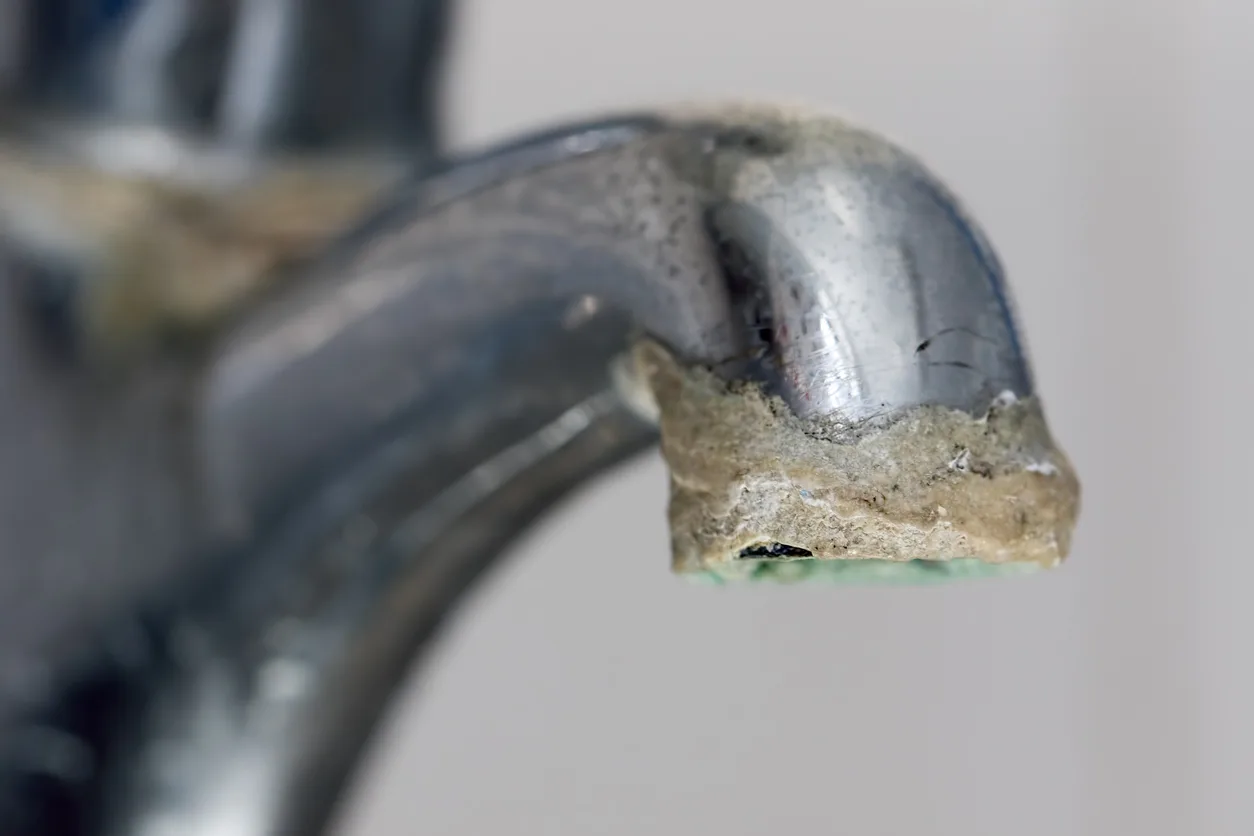
Mesa and Gilbert water runs 300 to 500 ppm. Here is how that mineral load attacks copper supply lines from the inside and what you can do about it.
How to prevent slab leaks before they start.
Hard water, thermal cycling, and Arizona's slab foundations are a tough combination for copper pipes. Pete explains what you can do to extend pipe life and catch problems early.